
Setup and Tutorials
How to Use HarnessKeys With ChatGPT for Coding Prompts
Jun
Not every AI coding workflow happens inside an IDE agent. Many developers still use ChatGPT for code explanations, debugging help, architecture options, test ideas, and small snippets. HarnessKeys can help in that browser-based or app-based workflow by making the repeated prompt actions easier to reach.
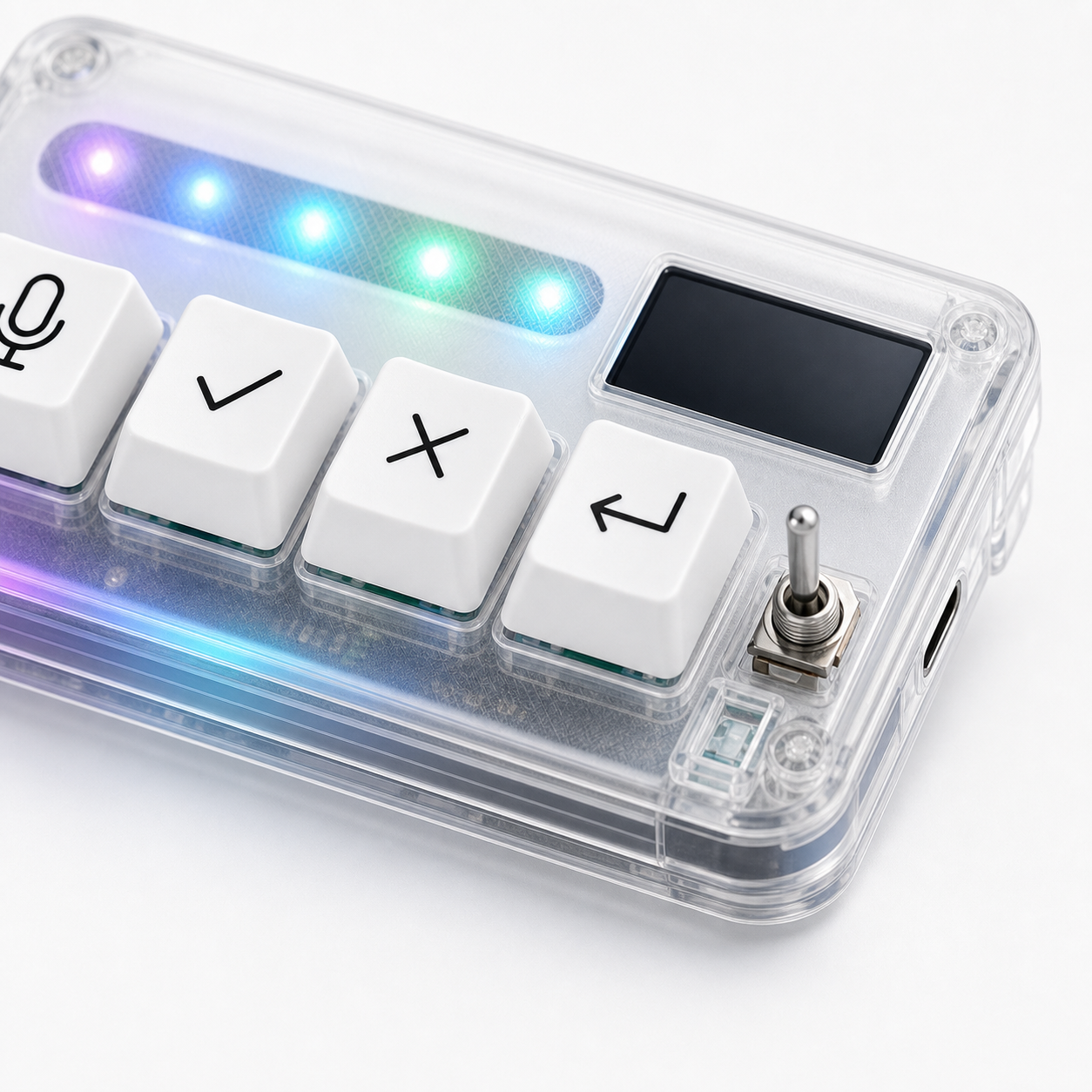
The best setup is simple. Use voice to express longer coding intent, return to submit or continue, approve as a personal review signal, and cancel to stop a bad direction or reset the interaction. You do not need to turn ChatGPT into a full automation environment to benefit from a physical keypad.
Use the prompt field as the center of the workflow
With ChatGPT, the prompt field is where most of the work starts. You paste an error, describe a function, ask for a comparison, or request a test plan. HarnessKeys should help you enter and control that prompt flow without forcing your hand back and forth between mouse, keyboard, and browser controls.
Before mapping anything complex, test the keypad in the prompt field. Confirm what return does, how the browser handles focus, and whether any shortcut conflicts with your operating system or browser extensions.
A browser is still software with focus rules. Respect them.
Let voice handle explanation-heavy prompts
ChatGPT is useful when you can explain context. Voice input can make that easier. Instead of typing a compressed request like “fix bug,” you can speak a fuller instruction: what the code should do, what error appears, what you already tried, and what kind of answer you want.
The mic key is valuable when it turns that explanation into a one-press habit. But test it carefully. Make sure dictation starts in the prompt field and that the selected microphone works. If text appears in the wrong tab or editor, fix focus before continuing.
Good voice prompts sound like clear bug reports.
Use return deliberately
Return behavior can vary by app, browser, and text field. It may submit a prompt, create a new line, or interact with a selected suggestion. Test this before a real session. If you often write multi-line prompts, make sure you know how to create a new line without accidentally submitting early.
One practical pattern is to compose the prompt, quickly review it, then use the return key as the final send action. That keeps the physical gesture tied to intention.
Do not let return become a nervous habit.
Treat approve as a review checkpoint
In a ChatGPT coding workflow, approve may not literally accept code into your editor. It can still serve as a personal checkpoint. You can map it to a safe action, or use it as part of a routine: read the answer, decide it is useful, then move the code or idea into your project manually.
This matters because copying code from a chat response is not the same as understanding it. Before using an answer, check whether it matches your language version, dependencies, project style, and security expectations.
A physical approve key should remind you that a decision happened.
Cancel when the answer is solving the wrong problem
Sometimes ChatGPT starts answering a question you did not really ask. It may over-explain, choose the wrong framework, ignore a constraint, or provide a broad tutorial when you needed a precise fix. A cancel or reset habit lets you stop that path and ask again with clearer context.
Cancel does not have to be dramatic. It can mean stop generation, clear the current direction, or mentally reject the answer and rewrite the prompt. What matters is that you do not keep polishing a bad thread just because it already started.
Bad context rarely improves by accident.
Build a clean copy-code flow
ChatGPT answers often end with code you want to test. Keep the copy flow careful. Read the snippet, check assumptions, copy only the needed part, paste into a safe branch or scratch file, then run the appropriate test or review. HarnessKeys can speed the surrounding prompt control, but code movement still needs care.
Avoid mapping a single key to copy, paste, submit, and approve all at once. That kind of automation may look efficient in a demo and feel dangerous in a real project.
Small, reversible actions are better for day one.
Use ChatGPT for thinking, not blind insertion
HarnessKeys makes prompting easier, which can tempt you to ask for more and review less. Resist that. ChatGPT is strongest when you use it to clarify options, explain trade-offs, inspect error messages, and generate candidates. Your project still needs your judgment.
When speaking prompts, include boundaries such as “explain before writing code,” “show two approaches,” or “do not assume a framework I did not mention.” Voice input makes it easier to include those boundaries naturally.
Better prompts reduce cleanup work.
A first mapping for ChatGPT coding sessions
Start with mic for dictation, return for prompt submission, cancel for stopping or resetting a bad direction, and approve as a reviewed-decision action. Test in a harmless coding question before using the setup for production work.
If the issue is with the device or order, use HarnessKeys support. If you are still deciding whether the keypad fits your workflow, review the HarnessKeys product page.
ChatGPT plus HarnessKeys works best when the keypad reduces prompt friction and you keep control over what code actually enters your project.
