
Setup and Tutorials
How to Set Up a Vibe Coding Keyboard on Windows
Jun
Setting up a vibe coding keyboard on Windows is about reliability first. Windows can handle external keyboards, Bluetooth devices, voice typing, editor shortcuts, browser shortcuts, and AI tools, but the first session should not mix all of those layers at once. HarnessKeys becomes useful faster when you prove each layer separately.
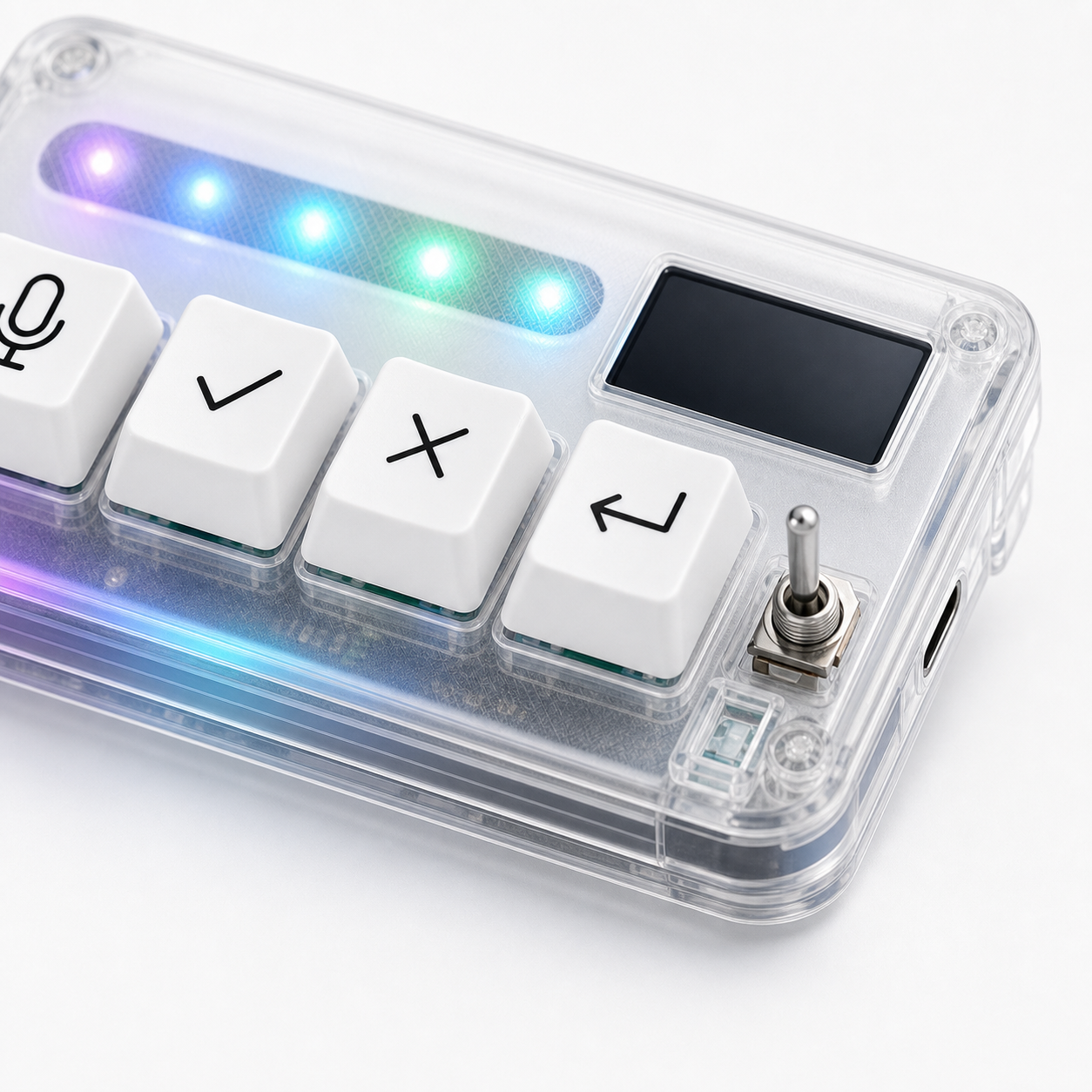
The goal is simple: make sure Windows receives the key input, confirm voice typing or dictation works if you plan to use it, map approve and cancel safely, and test everything in a harmless AI coding session before real work.
Start with a direct connection test
If possible, begin with USB. Plug HarnessKeys into the Windows machine, open Notepad or another plain text field, and press each key once. This gives you a clean baseline before Bluetooth, editor shortcuts, or AI tools enter the picture.
If the device does not respond, try another port, avoid a questionable hub, and check whether Windows recognizes the device. If it works in a simple field, the hardware input is probably reaching the system.
That baseline makes every later troubleshooting step easier.
Pair Bluetooth with patience
If you prefer Bluetooth, pair the device through Windows Bluetooth settings and wait until it shows as connected. Then repeat the same plain-text test. Do not open your coding assistant yet. Make sure Windows receives input first.
Bluetooth issues can come from pairing state, battery level if applicable, interference, sleep behavior, or Windows device management. If Bluetooth is flaky but USB is stable, keep USB for the first few serious sessions and return to wireless later.
A working workflow matters more than a cable-free desk on day one.
Check Windows voice typing before mapping the mic key
Voice input on Windows may involve system voice typing, browser permissions, app permissions, and the selected microphone. Start voice typing manually before assigning it to HarnessKeys. Confirm that speech appears in the intended field and that punctuation or correction behavior is acceptable for prompts.
If voice input does not work manually, the keypad mapping will not fix it. Check microphone privacy settings, input device selection, headset connection, and app access.
Once manual voice input is reliable, the mic key can turn it into a faster habit.
Watch for shortcut conflicts in editors and browsers
Windows applications can interpret the same shortcut differently. A key combination might submit in a browser, trigger a command in an editor, interrupt something in a terminal, or do nothing in an AI assistant panel. Test your HarnessKeys mapping in the exact apps where you plan to use it.
Use a scratch file or harmless prompt. Press one key at a time and write down what happens. If approve or cancel behaves differently depending on focus, either change the mapping or build a clear focus habit before pressing it.
Context matters more than the key label.
Review power and sleep behavior
Windows setups can include sleep, USB power management, Bluetooth power saving, laptop lid behavior, and dock behavior. If the keypad works at first but becomes unreliable after the computer sleeps, check whether the connection is being suspended or disconnected.
This is not unique to HarnessKeys. It is common with small peripherals. A quick reconnection may be enough, but if it happens often, consider USB for the main workstation or adjust device power settings.
Reliability is part of productivity.
Keep approve conservative on Windows too
Windows makes it easy to create shortcuts that affect files, windows, terminals, and browser state. Keep the approve key away from destructive actions at first. It should not delete, overwrite, force close, install, or submit risky commands without review.
Use approve for reviewed AI suggestions or low-risk continuation. If a tool asks for permission to run a command or modify files, read the request before approving. A physical button should support judgment, not replace it.
This is especially important in repositories you care about.
Test cancel where it will actually be used
Cancel may need to stop generation, close a dialog, interrupt a terminal process, or reject a suggestion. Test it in your browser, editor, terminal, and AI tool if those are part of your workflow. Do not assume one result applies everywhere.
If cancel does nothing in the one place you need it most, change the mapping before using HarnessKeys in serious work. A reliable stop key is one of the strongest reasons to use a dedicated keypad.
Stopping wrong work early saves more time than speeding up good work slightly.
A Windows first-session routine
Open a plain text field, test every key, test voice typing manually, map the mic key, submit one harmless prompt, approve one reviewed suggestion, cancel one bad direction, and write down the final mapping. That routine is enough for a useful first day.
For product details, start with the HarnessKeys product page. For hardware or order problems, contact support with the order number and clear setup notes.
Once Windows input, voice, and shortcut behavior are predictable, HarnessKeys can sit quietly beside the keyboard and make the AI coding loop easier to control.
