
Troubleshooting and Support
Keyboard Shortcut Conflicts in AI Coding Tools
Jun
Keyboard shortcut conflicts are one of the quietest ways an AI workflow breaks. You press a key, expect approve, cancel, voice, or return, and another layer captures the shortcut first. The operating system, browser, editor, terminal, extension, AI tool, or accessibility feature may all compete for the same signal.
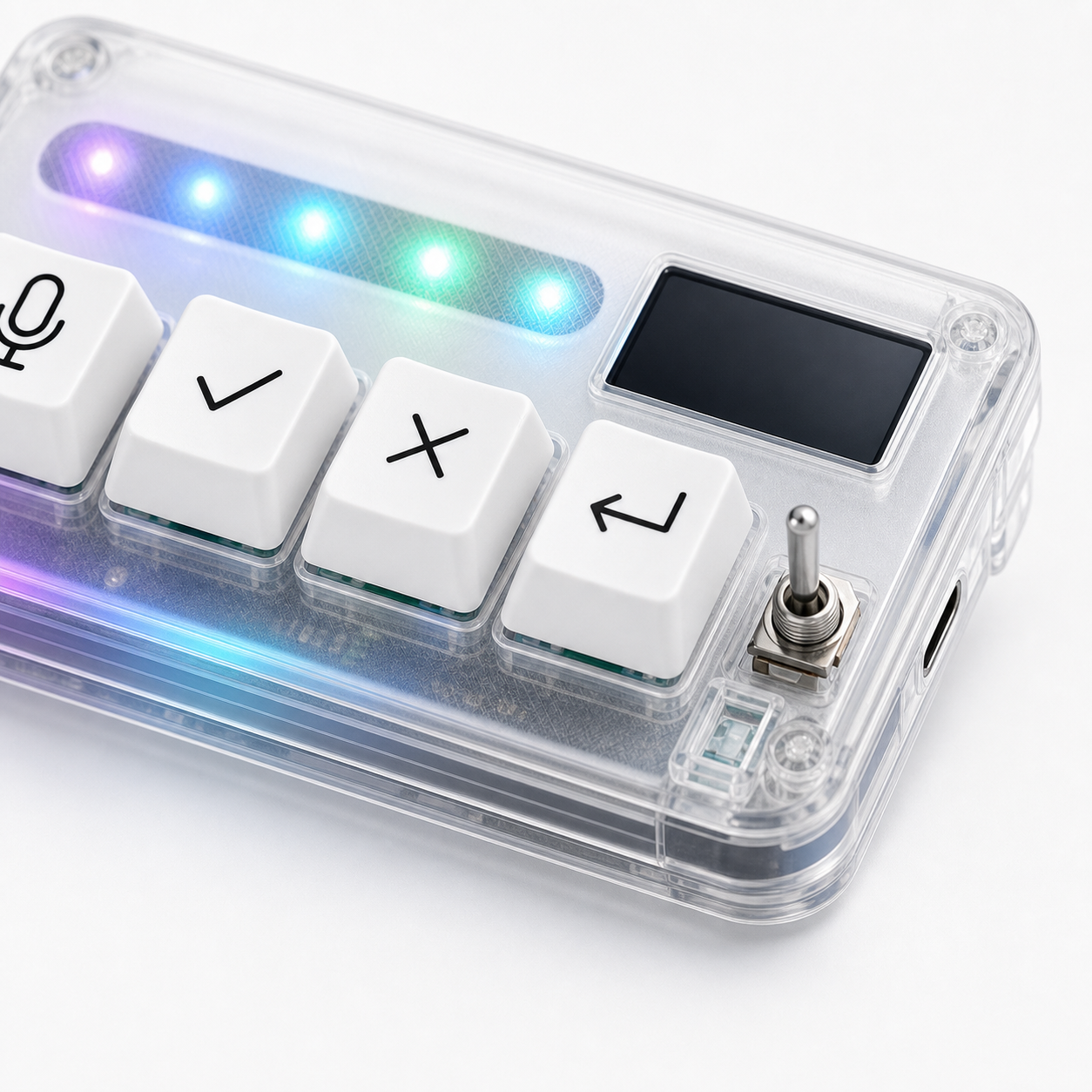
HarnessKeys works best when each key has a predictable role. If shortcuts conflict, the fix is to find the owner, change one layer at a time, test after updates, and keep a mapping sheet that records the final behavior.
Find the first layer that responds
When a shortcut misbehaves, ask which layer responded first. Did the operating system open search? Did the browser move focus? Did the editor run a command? Did the AI tool respond? Did nothing happen at all?
Test in a plain text field, browser, editor, and target AI tool. The point is not to use every app forever. The point is to discover where the shortcut gets captured.
The first responding layer is usually the conflict owner.
Separate global shortcuts from app shortcuts
Global shortcuts work across the system. App shortcuts work only when the app has focus. If a global shortcut uses the same combination as your AI workflow, the target app may never receive the input.
Check system settings, launcher tools, screenshot tools, dictation shortcuts, window managers, browser extensions, and editor keybindings. One of them may be using the same shortcut you assigned to HarnessKeys.
Global conflicts often feel random until you find them.
Change only one shortcut layer
Do not fix conflicts by changing everything at once. Change one layer, test, and record the result. If you change the OS shortcut, editor shortcut, browser shortcut, and keypad mapping together, you will not know what solved the issue.
Start with the least disruptive change. If a browser extension owns the shortcut, changing that extension may be easier than changing your whole HarnessKeys map.
One change per test keeps the setup understandable.
Reserve simple roles for the keypad
Approve, cancel, voice, and return should stay simple in your head. If a key has too many app-specific meanings, conflicts become harder to notice. You may think the key is wrong when the real issue is that the same signal has too many jobs.
Use a consistent role naming system: mic starts voice input, approve confirms reviewed decisions, cancel stops or rejects, return submits or continues. Then map the exact shortcut per tool.
Roles reduce mental overhead.
Retest after AI tool updates
AI coding tools update often. An update can add a shortcut, change focus behavior, or alter how approval and cancellation work. If a mapping suddenly breaks, run a quick shortcut conflict test before assuming the hardware changed.
This is especially important if the key still works in a plain text field. That means input is reaching the computer, while the software layer changed.
Updates are a common source of shortcut drift.
Keep a mapping sheet
A mapping sheet does not need to be fancy. List each HarnessKeys key, its role, shortcut, app, connection mode, and any warning. Include exceptions such as “cancel only works when terminal focus is active” or “voice requires browser microphone permission.”
This sheet becomes your first troubleshooting tool. When something breaks, you can compare expected behavior with current behavior instead of relying on memory.
Documentation makes shortcuts safer.
Use safe temporary mappings during diagnosis
While diagnosing conflicts, switch approve and cancel to low-risk actions or avoid using them in real projects. Shortcut debugging should not happen inside important edits, payment workflows, or customer-facing content.
Test with harmless prompts and scratch files. Once the conflict is resolved, move the mapping back into real work gradually.
Shortcut testing should not create new damage.
Keep browser extensions in the suspect list
Browser extensions can intercept shortcuts, change page focus, inject UI, or alter how an AI web app behaves. If a shortcut works in one browser profile but not another, extensions may be involved. Test in a clean profile or private window only if that is safe and does not interfere with your account workflow.
This is common for productivity extensions, tab managers, clipboard tools, grammar tools, and command palettes. The keypad may be sending the correct input while an extension captures it first.
Use one canonical mapping per tool
When a tool has several possible shortcuts for the same action, choose one canonical mapping and stick with it. Do not keep alternate shortcuts in your head unless you have to. Multiple possibilities create uncertainty during live work.
The mapping sheet should show the action you actually use, not every action that could work. Simpler records make troubleshooting faster when something changes.
Rebuild confidence with a clean prompt loop
After resolving a shortcut conflict, run one clean prompt loop before returning to serious work. Start voice input, submit a harmless prompt, approve a reviewed result, cancel a deliberately wrong follow-up, and return to the prompt field. This confirms that the conflict fix works across the full workflow, not only in a single shortcut test.
If any step feels uncertain, stay in the test loop. Real work should not be the place where you discover that the conflict only moved to another key.
Support details for shortcut conflicts
If you need help, contact HarnessKeys support with order number, checkout email, operating system, app name, connection mode, key role, current shortcut, expected action, and what happens in a plain text field.
If the issue is physical, include photos. If the keypad works in simple fields but fails only in one tool, the evidence may point to app shortcut conflicts. For product context, see the HarnessKeys product page.
