
Troubleshooting and Support
Status Screen Looks Wrong or Blank: What It Can Mean
Jun
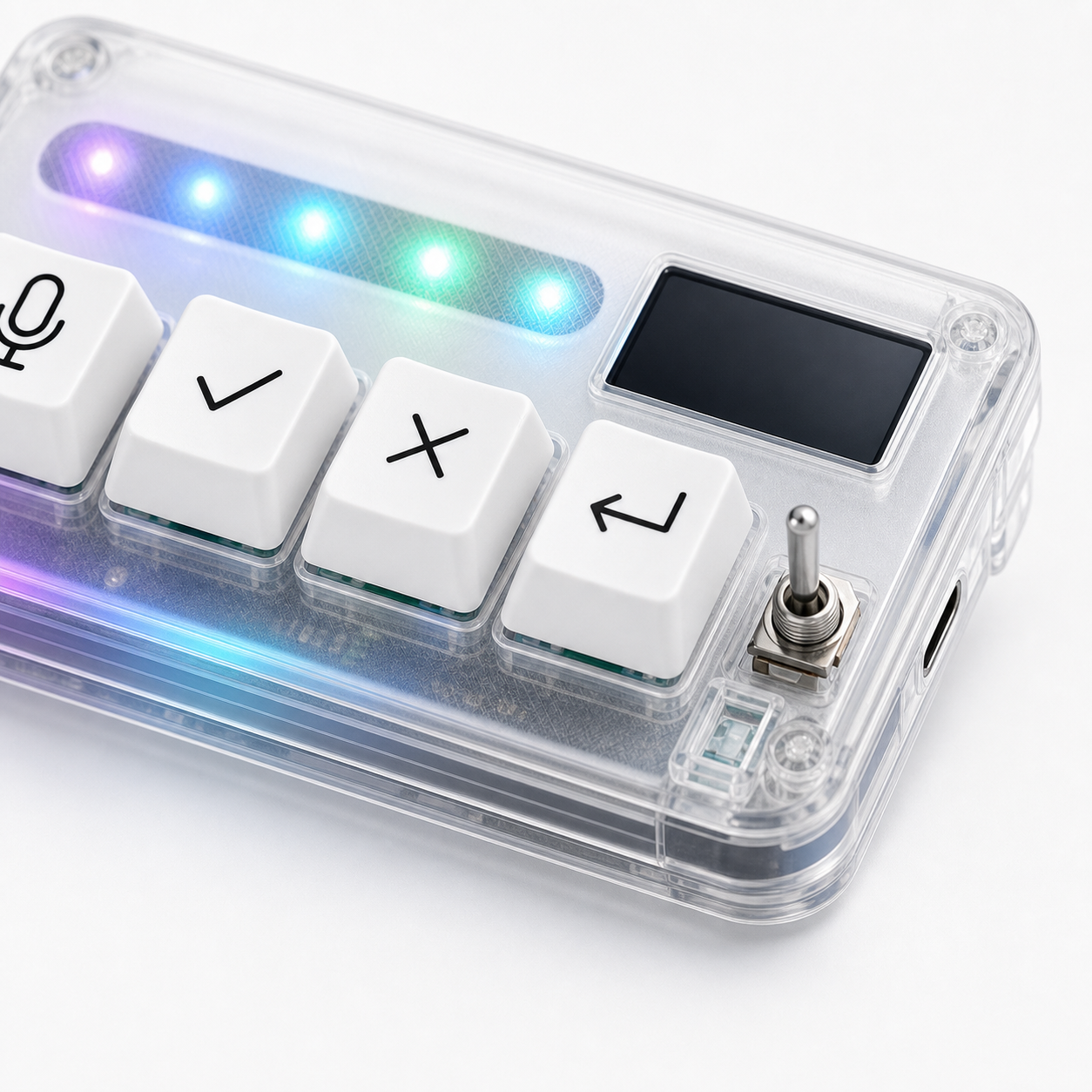
A status screen that looks wrong or blank can make a keypad feel uncertain. Is the device powered? Is it connected? Is it in the wrong mode? Is the screen asleep? Is there a batch or firmware difference? Before assuming the product is defective, check the basic state of the device and compare the screen issue with actual key behavior.
With HarnessKeys, the most important question is whether the keypad still works as an AI workflow controller. Screen feedback is useful, but input behavior, connection state, and physical condition are the first troubleshooting clues.
Check whether the device has power
Start with power. If connected by USB, confirm the cable is seated and the port works. If using Bluetooth or another wireless setup, confirm the device is awake and connected according to your operating system. A blank screen may simply mean the device is not powered, not awake, or not actively connected.
Test keys in a plain text field. If the keys work while the screen is blank, the issue may be display or mode related. If keys do not work either, troubleshoot connection first.
Power and input tests belong together.
Compare screen state with connection state
Open system Bluetooth settings or check the USB connection. Does the computer show the device as connected? If the computer sees it and key input works, the screen state may not reflect the entire device status. If the computer does not see it, the screen problem is part of a larger connection issue.
Write down the combination: screen blank, keys work; screen blank, keys fail; screen wrong, Bluetooth connected; screen wrong, USB works. These combinations help support understand the issue.
One symptom is less useful than the pattern.
Check mode expectations carefully
Some status displays or lights may change based on connection mode, active state, or workflow state. Do not assume the screen should always show the same thing. If you recently switched from USB to Bluetooth, changed a mapping, or moved to another computer, the display behavior may not match your old expectation.
Return to a known baseline. Connect directly, test input, and observe the screen in that simple setup.
Mode confusion can look like failure.
Allow for batch and firmware variation
Physical products can vary by fulfillment batch. Small details in display behavior, packaging, or presentation may differ without changing the main product role. The important distinction is whether the device functions correctly and whether the display issue affects normal use.
If the screen looks different from product photos but the device works, document the difference. If the screen is damaged, flickering, blank under normal power, or paired with input failure, contact support.
Cosmetic variation and functional failure are different support paths.
Restart from a simple baseline
Disconnect the device, close the target app, reconnect with the simplest connection mode, and test in a plain text field. Avoid hubs, multiple AI tools, and custom mappings during the baseline test. The goal is to observe the screen and input with as few variables as possible.
If the display returns to normal, reintroduce your normal setup one piece at a time. If it stays wrong, collect evidence.
Simple baselines reveal persistent problems.
Photograph the screen and package if needed
If you contact support, photos help. Take a clear photo of the screen state, the whole device, any visible damage, and the package or shipping label if the issue may be delivery-related. Do not send sensitive payment information.
For damaged or incorrect items, the refund and returns policy explains that photos or videos may be needed for review. Keep packaging until support has enough context.
Good evidence makes the review faster.
Do not ignore key behavior
When reporting a screen issue, also report whether the keys work. Support needs to know if voice, approve, cancel, and return still send input. A screen-only issue is different from a full device failure.
Test each key in a harmless field and record the result. If some keys work and others do not, include that detail too.
The screen is one clue. Input behavior is another.
Watch the screen during reconnect
One useful test is to observe the screen while reconnecting from a known state. Disconnect, wait briefly, reconnect, and watch whether the display changes at any point. Then repeat with the other connection mode if available. Do not do this rapidly over and over; give the device and operating system time to settle.
Note whether the screen is always blank, briefly shows something, changes only on USB, or changes only on Bluetooth. Those details are much more useful than saying the screen is “weird.”
Separate cosmetic concern from blocked workflow
If the screen looks different but the keys work reliably, your workflow may still be usable while support reviews the display question. If the blank or wrong screen is paired with connection failure, missing input, or visible damage, treat it as a more serious issue.
This distinction helps you decide whether to continue using the keypad carefully or pause until support responds.
Support details for display uncertainty
Contact HarnessKeys support if the screen stays blank or wrong after baseline testing. Include order number, checkout email, connection mode, operating system, whether keys work, whether the issue appears on USB and Bluetooth, and clear photos.
For shipping timing or delivery context, review shipping delivery. For the product overview, see the HarnessKeys product page.
