
Use Cases and Workflow Playbooks
How to Use HarnessKeys for Treadmill Desk or Walk-and-Talk Coding
Jun
A treadmill desk changes the rules for coding. Typing becomes harder, mouse precision drops, and attention has to include physical safety. HarnessKeys can help with some walk-and-talk AI workflows because it gives a few actions a dedicated place, but it should be used conservatively.
The right goal is not “write complex code while walking fast.” The right goal is to use voice and simple controls for low-risk planning, review, documentation, or brainstorming while keeping safety first.
Start slower than you think
If you are walking while coding, start at a very slow speed. You should be able to speak clearly, read the screen, and press a key without looking down for long. If you feel unstable, stop the treadmill before using the keypad.
HarnessKeys is small, which is useful, but any desk device can become a distraction if the walking pace is too high. The keypad should reduce movement, not tempt you into risky multitasking.
Safety is the first workflow requirement.
Use it for voice-heavy tasks
Treadmill desk sessions are best for tasks where voice is natural: outlining a feature, explaining a bug, drafting documentation, summarizing a code review, or brainstorming test scenarios. The mic key can start the prompt without requiring long typing while moving.
Keep prompts structured. Say the context, the request, and the boundary. Then stop speaking and review the output carefully before approving anything.
Walking does not excuse vague prompting.
Keep approve away from risky changes
Do not use a treadmill desk session to approve large file edits, run risky commands, or accept production changes quickly. Walking makes review slightly harder. That means your approval rules should be stricter, not looser.
Use approve for low-risk steps such as continuing an explanation, accepting a draft outline, or moving through a planning conversation. Save serious code edits for a seated or stable standing session where you can review without physical distraction.
The more motion in your body, the less risk you should put under one key.
Make cancel easy to hit without looking
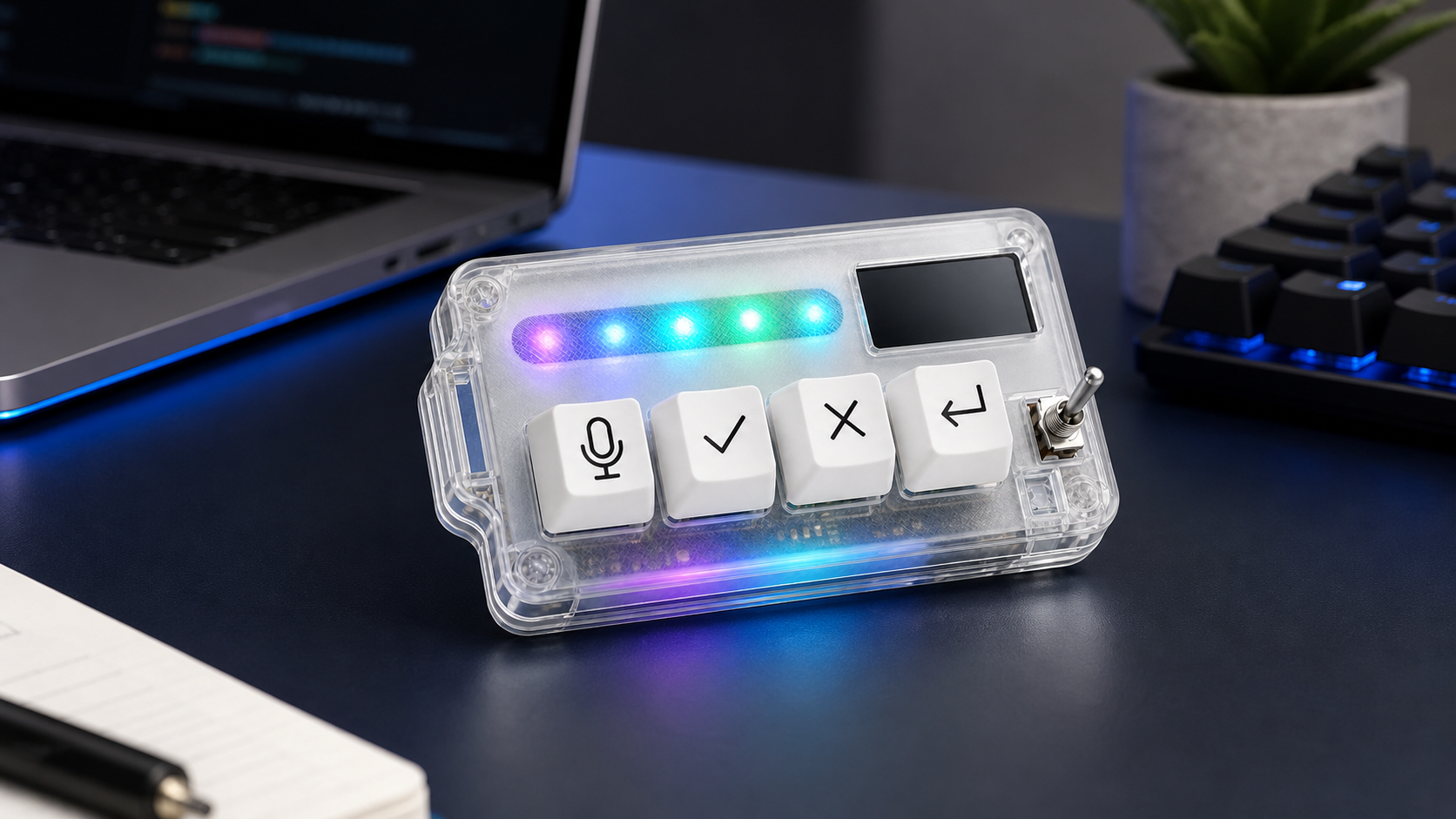
Cancel is important during walk-and-talk work because AI tools can drift while you are focused on balance, screen reading, and speech. Place HarnessKeys where the cancel key is easy to find by touch. Test it before starting the treadmill.
If you cannot hit cancel confidently, the setup is not ready. Move the keypad, slow down, or switch to a normal desk position.
A safe stop signal matters more than a fast approve signal.
Avoid dense code editing while walking
Some tasks are poor fits for treadmill use: editing tricky logic, reviewing security-sensitive code, handling payments, resolving merge conflicts, or making production decisions. These tasks require precise attention and often precise hand movement.
Use the treadmill session for thinking and drafting. Then sit down to apply, review, and test. HarnessKeys can bridge those phases, but it should not erase the distinction between planning and execution.
Not every task belongs on the treadmill.
Use short sessions and clear endpoints
Walk-and-talk coding works best in short blocks. Pick one goal before starting: outline tests, review a README section, summarize a bug, or create a refactor plan. When that goal is done, stop or switch tasks deliberately.
Without an endpoint, the AI conversation can wander and the physical session can become tiring. HarnessKeys can make the prompts easy to continue, so you need a boundary on purpose.
Short blocks keep the workflow useful.
Review all output at a stable desk
After the treadmill session, review the output while seated or standing still. Check generated plans, notes, tests, or code suggestions before using them. This final review is where you catch transcription errors, vague assumptions, and AI suggestions that sounded fine while walking.
Do not skip this step because the session felt productive. Movement can make productivity feel higher than the actual quality of the output.
Stable review turns walk-and-talk ideas into usable work.
Keep water, cables, and controls separated
Treadmill desks often have water bottles, headphone cables, charging cables, and desk controls close together. Keep HarnessKeys away from spills and away from anything you might hit while adjusting speed. If you use USB, route the cable so it cannot catch your hand or pull the keypad while walking.
This sounds basic, but physical safety is part of the workflow. A small device should make control easier, not add another object to manage under motion.
Save complex review for after the walk
If the AI tool produces a large answer while you are walking, mark it for later review instead of trying to judge every line in motion. Use the treadmill time to create ideas, outlines, hypotheses, or simple next steps. Then stop walking and inspect the important details with full attention.
This keeps the walk-and-talk workflow honest. You get the benefit of movement and voice without pretending that motion is the best context for every decision.
A conservative treadmill desk workflow
Use HarnessKeys on a treadmill desk for voice-first planning, low-risk prompts, cancellation, and session control. Avoid risky approvals, dense editing, and long sessions. Keep the device in reach, the walking pace slow, and the final review separate.
That is where the HarnessKeys AI workflow keypad can help without pretending that walking and serious code review are always a perfect match.
