
Use Cases and Workflow Playbooks
How to Use a Vibe Coding Keyboard During Pair Programming
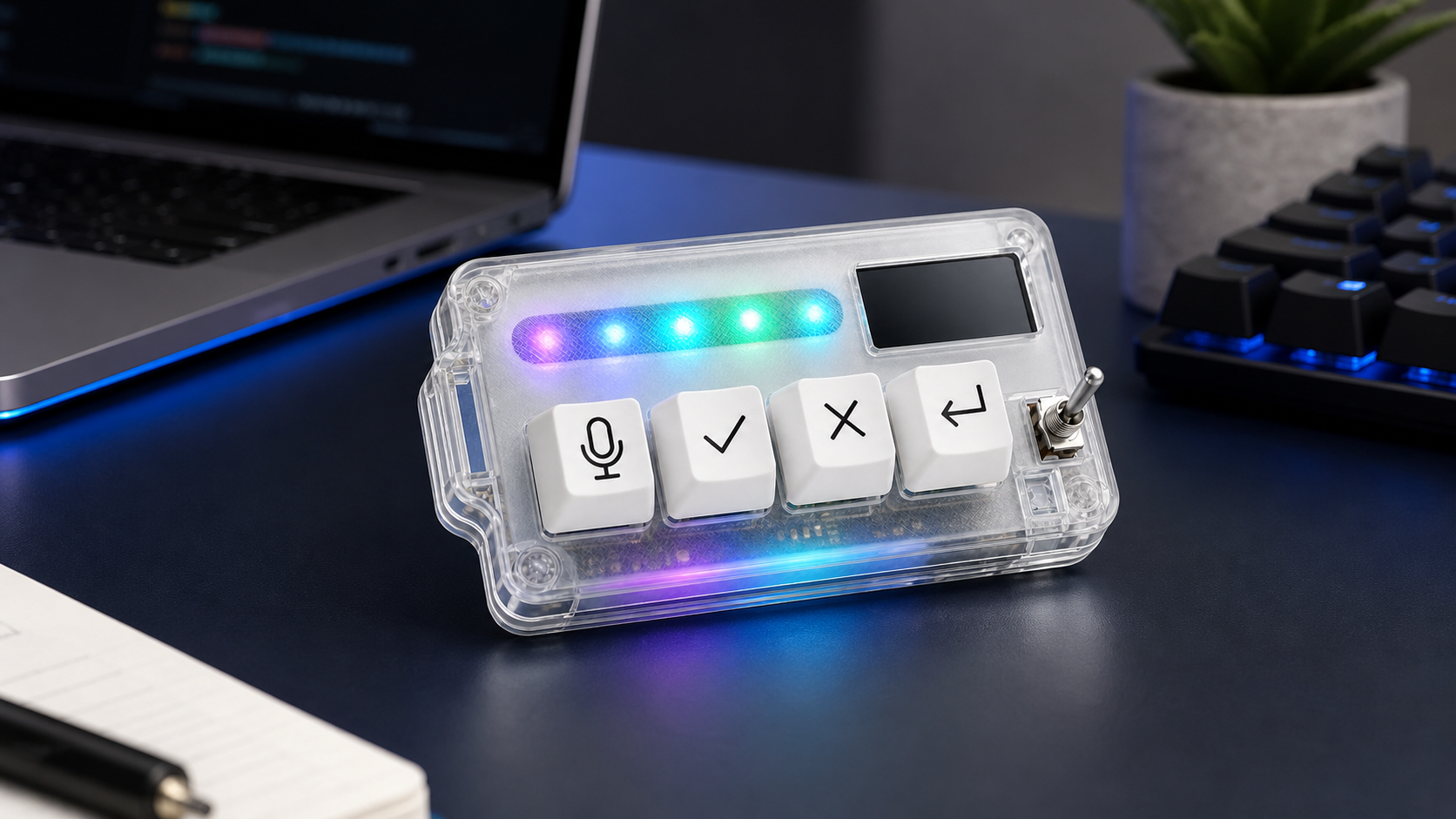
Jun
A vibe coding keyboard changes the social feel of pair programming because actions become visible. When one person has a physical approve key, cancel key, voice trigger, and return action, the pair needs shared expectations. Otherwise the session can feel like one person is silently steering an AI tool while the other watches.
HarnessKeys can be excellent in pair sessions when the controls are narrated and intentional. It makes the AI workflow easier to follow because approval, cancellation, and prompting become part of the conversation instead of hidden clicks.
Agree on the mapping before the session
Before coding, tell your pair what each key does. Do not assume the labels are obvious. Say: mic starts voice input, approve accepts a reviewed step, cancel stops a bad direction, and return sends or continues the prompt. If your setup differs, explain it clearly.
This takes less than a minute and prevents surprise. Pair programming already requires shared context. The keypad is part of that context.
If the other person is confused by a key, the mapping is not session-ready.
Narrate physical actions as decisions
When you press approve, say what you are approving. When you press cancel, say why. This keeps the session collaborative and makes the AI workflow easier to audit. A silent key press can feel like a hidden decision, especially when code changes are involved.
Good narration can be short: “Approving the test outline,” “Canceling because it changed scope,” or “Sending the follow-up prompt now.”
The goal is not ceremony. It is shared awareness.
Use voice prompts as pair conversation
Voice input can be powerful in pair programming because both people can hear the instruction before it reaches the AI tool. This creates a natural chance to refine the prompt. One person starts speaking, the other catches a missing constraint, and the final prompt becomes better.
Do not let voice become a monologue. Pause before sending if the prompt affects real code. Ask whether the boundary is clear, especially for refactors or bug fixes.
Spoken prompts should make collaboration easier, not louder.
Make approval etiquette explicit
Agree on what needs both people to review. Small explanation prompts may not need much discussion. File edits, test changes, command execution, or broad refactors should get a visible review before approval.
The approve key is convenient, which is exactly why etiquette matters. If one person approves too quickly, the other loses trust in the session. Slow down for meaningful changes.
Shared trust is more important than saving three seconds.
Cancel without treating it as disagreement
Canceling an AI direction is not a personal rejection of your pair’s idea. It is a workflow correction. Normalize that early. Say “let’s cancel this and ask narrower” instead of letting a bad response continue because stopping feels awkward.
A physical cancel key can make this easier. It gives the pair a clear way to stop the tool and reset the prompt. That is useful when the AI starts changing scope, explaining the wrong thing, or generating code neither person asked for.
Cancel is a collaboration tool.
Avoid surprise automation
Do not map HarnessKeys to hidden macros during pair programming unless the other person knows exactly what they do. A one-key sequence that changes files, runs commands, or submits prompts can feel alarming if it is invisible.
Keep the pair-session mapping simple and reviewable. If you use advanced mappings alone, consider disabling or avoiding them while pairing.
Transparency keeps the session comfortable.
Debrief the keypad workflow afterward
After the session, ask what helped and what felt distracting. Did voice prompts improve shared understanding? Did approve happen too quickly? Was cancel easy to follow? Did the keypad make the AI workflow more visible or more confusing?
Pair feedback is valuable because another person can notice habits you miss. Use that feedback to refine the mapping.
A better shared workflow is worth a short debrief.
Rotate control during longer sessions
If the pair session is long, consider switching who operates the AI workflow. One person can drive the editor while the other owns the prompt and review loop, then swap. HarnessKeys can stay in the same place or move between people, but the control rule should be explicit.
This prevents one person from becoming the permanent AI operator. Pair programming works better when both people stay mentally involved in decisions, not only in watching output from the side during important changes.
Use the keypad to expose uncertainty
Pair sessions are stronger when uncertainty is said out loud. If you are about to approve but feel unsure, pause with your hand off the key and say what is unclear. Maybe the diff needs another look, maybe the prompt missed a constraint, or maybe the AI answer is plausible but unproven.
This turns HarnessKeys into a conversation cue. The moment before approval becomes a chance for the pair to check thinking, not just a faster way to accept output.
Where HarnessKeys fits in pair sessions
HarnessKeys works best in pair programming when it makes control visible: speak the prompt, narrate decisions, approve after shared review, cancel bad directions, and keep the next step clear.
It should not turn one person into a silent AI operator. Used well, the HarnessKeys AI workflow keypad can make AI-assisted pairing feel more intentional and less scattered.
