
Troubleshooting and Support
HarnessKeys Not Connecting: USB and Bluetooth Checklist
Jun
If HarnessKeys is not connecting, start with a calm checklist. Connection problems can come from the cable, port, hub, Bluetooth pairing state, operating system settings, app focus, or the difference between hardware input and software mapping. The fastest path is to isolate one layer at a time.
This guide covers USB and Bluetooth checks before contacting support. If the device appears physically damaged or the package arrived with clear damage, take photos of the package, shipping label, and product before discarding anything.
Confirm what not connecting means
“Not connecting” can mean different things. The computer may not detect the device at all. Bluetooth may pair but not send input. USB may work in one port but not another. The keys may register in a text field but not in your AI app. Each case points to a different layer.
Before troubleshooting, write one sentence: “The device is not detected by the computer” or “The device connects, but keys do not work in Cursor.” That sentence helps you and support avoid guessing.
Specific symptoms save time.
Try a direct USB test
If you have a USB connection available, test it directly. Avoid hubs at first. Plug HarnessKeys into the computer, open a plain text field, and press each key once. This checks whether the computer receives input outside your AI tool.
If nothing happens, try another port and another cable if available. If the device works on one port but not another, the issue may be port or hub related. If it works in text but not in an app, the issue is probably mapping, focus, permission, or shortcut handling.
USB is a good baseline because it reduces wireless variables.
Check Bluetooth pairing state
If you use Bluetooth, open the operating system Bluetooth settings and confirm the device is paired and connected. If it appears but does not respond, remove or forget the device, restart Bluetooth if needed, and pair again.
Keep the device close to the computer during pairing. Avoid testing while surrounded by unnecessary wireless clutter if you suspect interference. After pairing, test in a simple text field before opening your AI workflow.
Pairing success is not the same as app success. Test both.
Restart the app after connection changes
Some apps do not notice input changes until they restart or regain focus. If HarnessKeys starts working in a text field but not in an AI app, close and reopen the app or browser tab. Also click into the exact prompt field or panel that should receive the key input.
App focus problems are common. A key can be working perfectly while the wrong window is active.
Test the simplest path before assuming hardware failure.
Separate connection from shortcut mapping
If keys register somewhere, the device is connecting at least partly. The remaining issue may be shortcut mapping. Your operating system, browser, editor, terminal, or AI tool may interpret the key differently or block the shortcut.
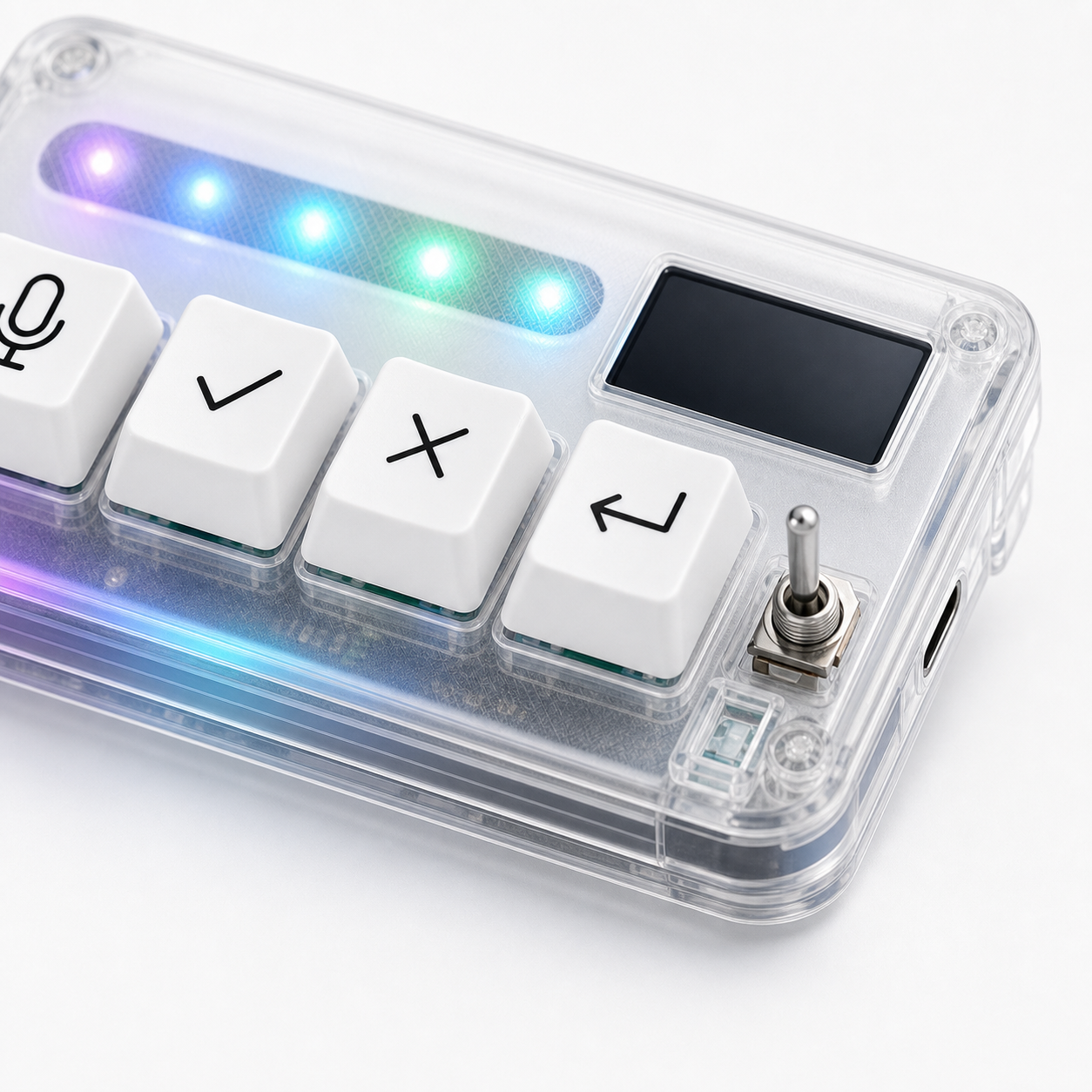
In that case, review the mapping for mic, approve, cancel, and return. Test one key in one app at a time. Do not change every mapping at once.
Connection and mapping are different problems.
Check for sleep and power behavior
If HarnessKeys works at first and then stops after the computer sleeps, the connection may need to wake, reconnect, or be reselected. This can happen with USB hubs, Bluetooth devices, laptops, docks, and power-saving settings.
Try reconnecting, waking the device if applicable, switching ports, or testing without the dock. If USB is reliable but Bluetooth is not, use USB while you isolate the wireless issue.
Reliability matters more than the cleanest-looking desk.
Record one successful test and one failed test
Before contacting support, write down the simplest test that worked and the simplest test that failed. For example, “USB works in a text editor on the laptop, but Bluetooth does not pair on the desktop” is much more useful than “it is broken.” If nothing worked, say that too and list the cable, port, and computer tested.
This small record helps support identify whether the issue is device-wide, connection-mode specific, app-specific, or tied to one machine.
Do this before requesting replacement or return help. A clear test record makes the next step more accurate. It may show a simple setup issue, or it may give support the evidence needed to review a possible product problem.
Connection details to send HarnessKeys support
If the checklist does not solve it, contact HarnessKeys support. Include the order number, checkout email, computer type, operating system, USB or Bluetooth mode, what you tested, and what happened in a plain text field. If there is visible damage, include clear photos.
Do not send passwords, full card numbers, wallet credentials, or bank details. Support needs order and troubleshooting information, not payment secrets.
If the issue may involve shipping damage or an incorrect item, the refund and returns policy explains that review may require photos or videos.
Keep the product path in view
HarnessKeys is designed as a compact AI workflow keypad, so the end goal is reliable control in your daily tools. Start from the product page if you need to review what the keys are meant to support, and use support when the device behavior remains unclear after basic checks.
