
Troubleshooting and Support
USB Keypad Not Detected: What to Try First
Jun
When a USB keypad is not detected, it is tempting to jump straight to “the device is broken.” Sometimes hardware really is the issue, but many USB problems come from cable, port, hub, power, operating system recognition, or app focus. A short checklist can save a lot of frustration.
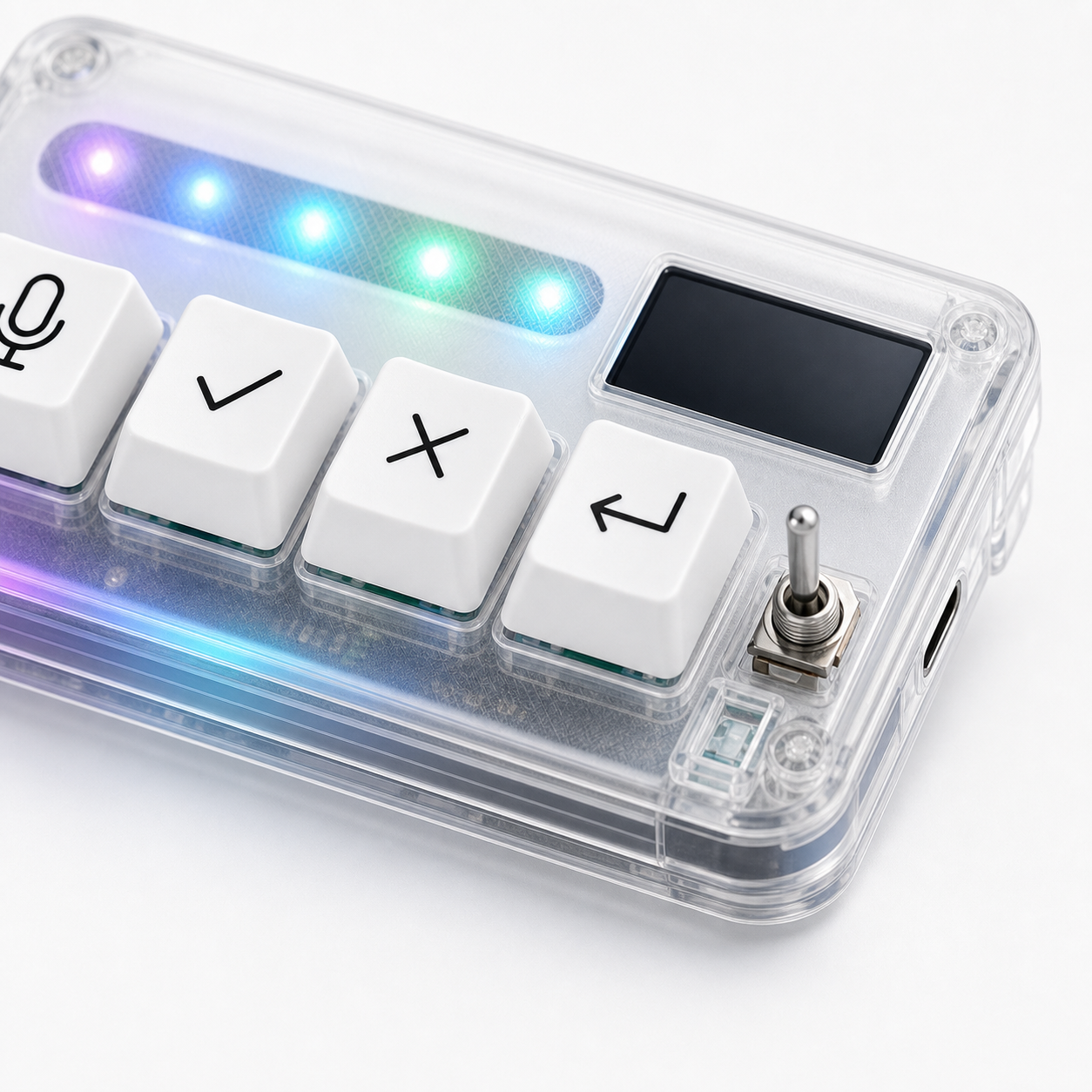
This guide focuses on first steps for HarnessKeys or any compact AI workflow keypad connected by USB. The goal is to learn whether the computer sees the device, whether key input reaches a simple field, and whether the remaining problem is app-specific.
Start with the cable path
Check the cable connection at both ends. A cable can look connected while not seated fully. If you have another compatible cable available, test it. Some cables are charge-only or unreliable for data, and that can make a small USB device appear dead.
If a different cable works, the issue was not the keypad. Keep the working cable with the device and avoid the questionable one for setup.
Simple cable checks are not glamorous, but they are often the fix.
Try another USB port directly
Plug the keypad directly into the computer if possible. Avoid hubs, docks, monitor ports, and adapters during the first test. Those accessories are useful, but they add variables. If the direct connection works, reintroduce the hub later and see whether the problem returns.
If one port works and another does not, note that. The issue may be a port, power, adapter, or dock problem rather than the device.
Direct connection gives you the cleanest answer.
Open a plain text field
After connecting, open a simple text editor, blank document, or browser search field. Press each key once. If the computer receives input there, the USB connection is working at the basic input level.
If the keys work in the text field but not in an AI tool, the problem is likely focus, shortcut mapping, app permissions, or tool-specific behavior. Do not keep unplugging the device when the issue is really app routing.
Text field testing separates hardware from software.
Check system device views
Depending on your operating system, you may be able to see connected USB or keyboard devices in system settings, device manager, system report, logs, or input tools. You do not need to become a hardware expert, but checking whether the device appears can guide the next step.
If the device appears but input does not work, the issue may be mapping or focus. If it never appears on any port or cable, collect that detail for support.
Evidence helps more than guessing.
Remove the hub from the first diagnosis
USB hubs and docks can create confusing behavior. They may have power limits, flaky ports, sleep issues, or compatibility quirks. If HarnessKeys is not detected through a hub, test directly. If it works directly, the hub is part of the problem.
That does not mean you can never use the hub. It means you should not diagnose the keypad through the most complicated connection path.
Start simple, then rebuild the desk setup.
Restart after changing ports
Some systems behave better after reconnecting or restarting, especially if a USB device was plugged in during sleep, dock switching, or repeated failed attempts. Disconnect the device, restart the machine or app if appropriate, reconnect, and test in a plain field.
This is a basic step, but it clears odd states. If the same problem returns immediately, continue with cable, port, and support evidence.
Restarting is not a diagnosis. It is a reset.
Do not confuse app focus with USB detection
If the keypad works in one app and not another, the USB device is detected. The problem is app focus or shortcut handling. Click the target prompt field, editor panel, or browser window before testing. Check whether the shortcut is reserved by the operating system or another app.
This is especially common with mic, approve, cancel, and return mappings. The device can send input correctly while the app ignores it.
Focus problems feel like hardware problems until you test simply.
Test another machine if one is available
If you have access to another computer, test the keypad there with a direct USB connection and a plain text field. This does not need to be a full setup. It is only a detection test. If the keypad works on another machine, the original computer, port, hub, or operating system state is more likely involved.
If it fails on multiple machines with multiple cables, that is stronger evidence to send support.
Keep the test simple on the second machine. Do not install extra tools, change mappings, or open your AI stack. Plug in, open a basic field, press the keys, and record the result. The cleaner the test, the easier the conclusion.
USB evidence to send HarnessKeys support
Contact HarnessKeys support if the keypad is not detected after trying another cable, another port, direct connection, restart, and a plain text field test. Include the order number, checkout email, computer and operating system, connection path, and what happened in each test.
If there is physical damage, include clear photos of the package, shipping label, and product. If the issue seems tied to shipping damage, review the refund and returns policy. Keep sensitive payment credentials out of support messages.
