
Troubleshooting and Support
Bluetooth Pairing Problems With a Vibe Coding Keyboard
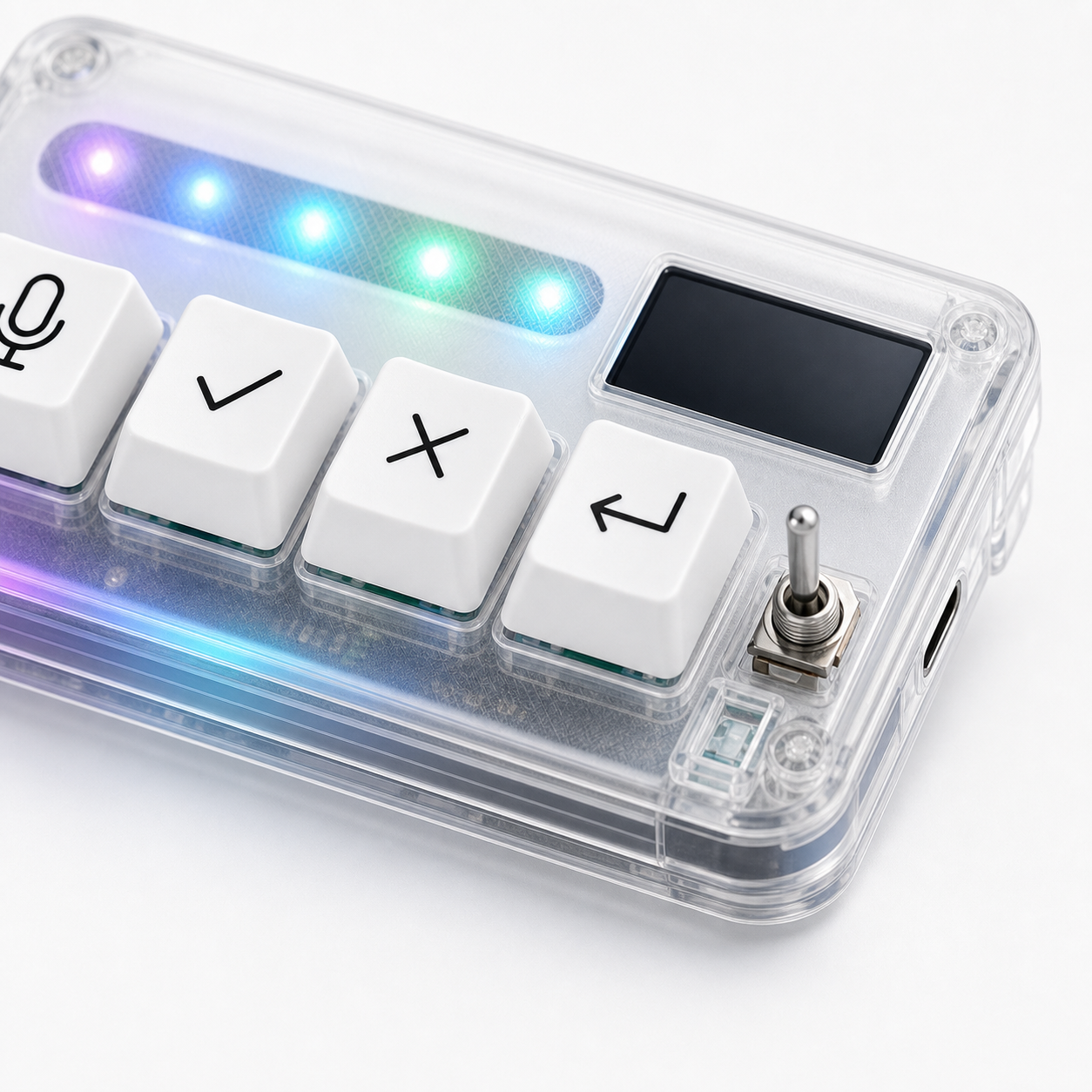
Jun
Bluetooth pairing problems are frustrating because they look like hardware failure even when the device, operating system, and app are simply out of sync. A vibe coding keyboard can be perfectly useful over Bluetooth, but the first troubleshooting step is to separate pairing from mapping and app behavior.
If HarnessKeys is not pairing or not responding over Bluetooth, use this checklist before assuming the device is defective. When in doubt, test USB as a baseline so you know whether the problem is wireless-specific.
Forget the old pairing record
If the device appeared in Bluetooth settings before but will not connect now, remove or forget the old pairing record. Then pair again from a clean state. Operating systems can hold onto stale Bluetooth records that look connected but do not behave correctly.
After removing the record, restart Bluetooth if your system makes that easy, keep the keypad close to the computer, and try pairing again. Do not open your AI app until the operating system says the device is connected.
A clean pairing record solves more problems than people expect.
Pair again near the computer
During pairing, distance matters. Put the keypad close to the computer and avoid unnecessary obstacles. If the device is across the desk behind monitors, metal stands, or other electronics, move it closer for the initial pairing test.
Once it pairs and sends input reliably, you can move it to the preferred desk position. If it only works close to the machine, note that for troubleshooting.
Pairing tests should remove distance as a variable.
Check whether Bluetooth connects but input fails
Connected does not always mean useful input is reaching the app. After pairing, open a plain text field and press each key. If the keys register there, Bluetooth is working at the system level. If your AI tool still ignores the keys, look at app focus, shortcut conflicts, or permissions.
If keys do not register in a plain text field, the issue is earlier: pairing, device state, operating system settings, or wireless stability.
This one test tells you which direction to investigate.
Reduce interference during testing
Bluetooth can be affected by distance, crowded wireless environments, low battery if applicable, competing paired devices, and physical obstacles. You do not need to create a laboratory, but you should simplify the test environment.
Move the keypad close, disconnect unused Bluetooth devices if needed, and test away from obvious interference. If behavior improves, reintroduce your normal setup one piece at a time.
Wireless troubleshooting is often about removing variables.
Compare against USB mode
If USB works and Bluetooth does not, that is useful information. It means the device can send input, and the issue is likely Bluetooth pairing, wireless environment, or operating system handling. Use USB temporarily if you need to keep working.
If neither USB nor Bluetooth works in a simple input field, collect details and contact support. That is a different symptom than Bluetooth-only trouble.
USB is not defeat. It is a diagnostic baseline.
Restart the target app after pairing
After pairing, some apps may need focus or restart before they respond as expected. Open the AI tool, click the prompt field or relevant panel, and test one key. If it fails, test the same key in a plain text field again.
If text field input works but the app fails, the problem is not basic Bluetooth pairing. It is app-specific routing or shortcut behavior.
This distinction prevents unnecessary returns.
When Bluetooth is not worth fighting
If your desk or computer makes Bluetooth unreliable, use USB. A stable AI workflow is more important than wireless purity. This is especially true if you rely on cancel or approve during active coding sessions where missed input would be frustrating.
You can always return to Bluetooth later after testing updates, changing the desk layout, or removing interference.
Choose the mode that earns trust.
Retest after sleep or travel
Bluetooth problems often appear after a laptop sleeps, moves to another room, connects to a dock, or returns from travel. If pairing worked yesterday but fails today, test after a restart or a clean reconnect before changing every shortcut. The wireless state may simply be stale.
If the problem repeats after every sleep cycle, note that pattern. It is useful evidence and may point to operating system power behavior rather than the keypad itself.
Do not pair from two machines at once
If you move HarnessKeys between a desktop and laptop, make sure you know which machine is trying to connect. A Bluetooth device that is still remembered by one computer may not behave the way you expect on another. Disconnect or forget it on the old machine if pairing gets confusing.
This is a common multi-device problem, not a sign that the keypad is unusable. Test with one computer active, one pairing attempt, and one plain text field before adding the second machine back into the setup.
What support needs to know
If pairing still fails, contact HarnessKeys support. Include the order number, checkout email, operating system, computer model if useful, whether USB works, what appears in Bluetooth settings, and what happened in a plain text field.
If the issue followed shipping damage or the item seems incorrect, include clear photos and review the refund and returns policy. For delivery context, the shipping delivery page explains post-fulfillment tracking expectations.
Clear details help support separate wireless setup from product problems.
