
Troubleshooting and Support
RGB Light Bar Not Matching Your Workflow State
Jun
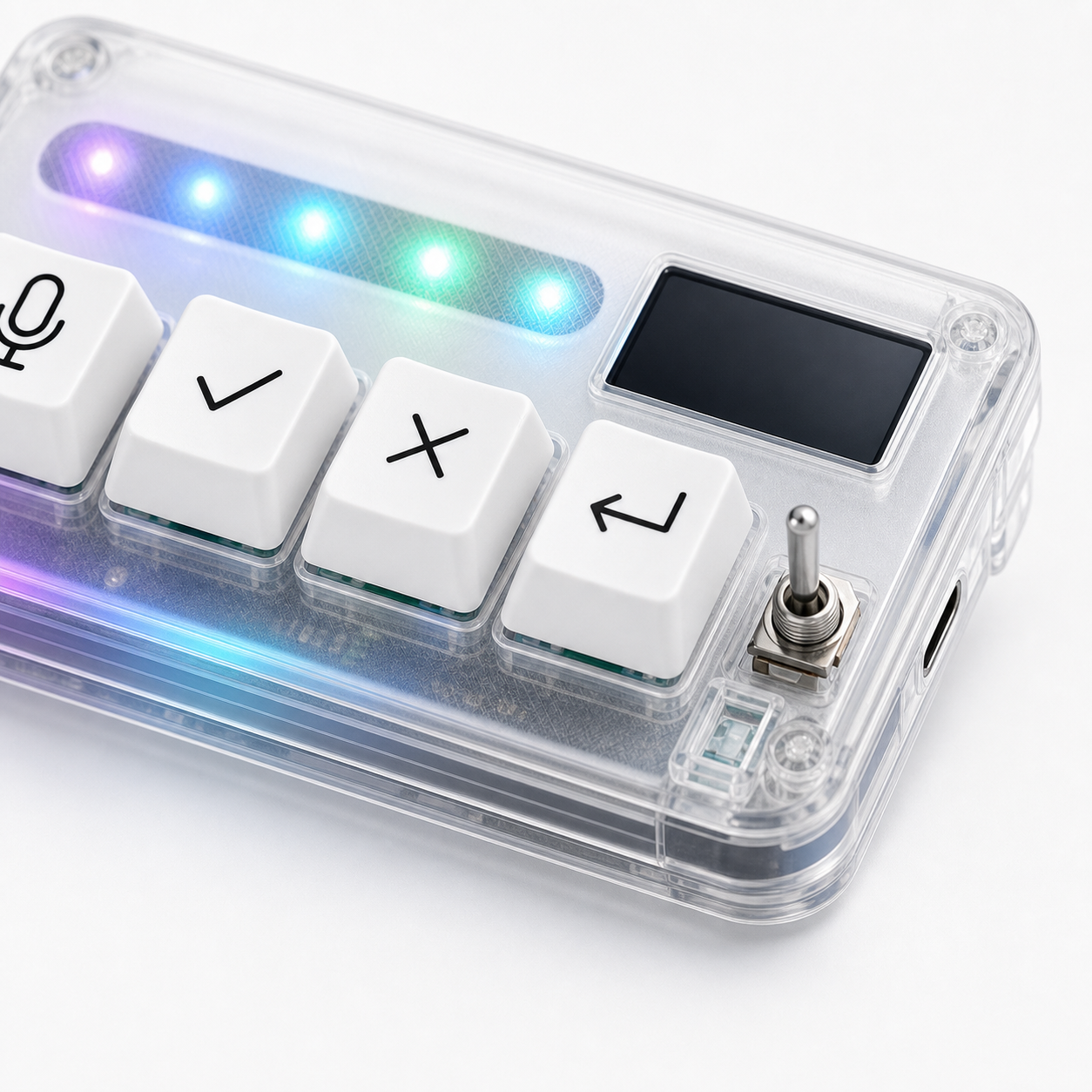
An RGB light bar can feel like a promise: the color should match the workflow state. But light feedback is only useful when expectations are clear. If the light bar does not match what you think the AI tool is doing, the cause may be mode mismatch, limited app integration, connection state, or a misunderstanding of what the light can actually represent.
HarnessKeys is built around physical workflow controls. Lights can support that experience, but they should not be treated as the only source of truth. Always compare light behavior with key input and app state.
Confirm what the light is meant to show
Before troubleshooting, define what you expect the RGB light bar to indicate. Connection state? Mode? Power? A custom workflow state? A cosmetic lighting pattern? If the expectation is unclear, the light will always feel wrong.
Check the product context and your setup notes. If you assigned meaning to colors yourself, document that mapping. If the light behavior is built into the device or software, test it against the simplest supported state first.
Meaning has to be defined before it can be debugged.
Check for mode mismatch
A light state may change depending on USB, Bluetooth, standby, active input, or another mode. If you recently switched connection mode, moved machines, or changed mappings, the light bar may no longer match your old mental model.
Return to a baseline. Connect directly, test key input, and observe the light without running a complex AI workflow. Then switch modes deliberately and note what changes.
Mode mismatch is common with small hardware controllers.
Do not over-expect app integration
Some users expect lights to reflect every AI app state: listening, generating, waiting, approving, canceling, complete. That level of feedback depends on app integration and software support. A hardware light bar may not automatically know what a browser, editor, or AI tool is doing unless the workflow is explicitly connected.
If the light does not follow a specific app state, that may be a limitation rather than a failure. Test what it can actually show in your setup.
Lights are helpful, but they are not mind readers.
Compare light feedback with key input
Open a plain text field and press each key. If key input works but the light looks unexpected, the issue is likely display, mode, or expectation. If key input fails too, troubleshoot connection first.
This comparison prevents you from treating a visual mismatch as a full device failure. It also gives support better evidence if the light behavior truly seems wrong.
Input and light behavior should be reported together.
Reset to the simplest lighting state
If your setup allows resetting or simplifying the light behavior, return to the simplest state before testing. Avoid custom color rules, multiple apps, or complex automation during the first diagnosis. The goal is to see whether the light can behave predictably in a basic setup.
After that, reintroduce custom behavior one rule at a time. If the mismatch returns after one rule, you found the likely cause.
Complex lighting rules need simple tests.
Watch for sleep and reconnect behavior
RGB state may not always resume exactly as expected after sleep, reconnect, Bluetooth handoff, or app restart. If the light is wrong only after waking the computer, record that pattern. Then test after a clean reconnect.
A repeatable pattern is more useful than “sometimes wrong.” It tells you whether the issue is startup, sleep, connection, or ongoing use.
Patterns are troubleshooting gold.
Use workflow state from the app first
When deciding whether an AI tool is listening, generating, waiting, or complete, trust the app’s visible state first. The light bar can support your sense of control, but the app is the source of truth for what the software is doing.
This is especially important for approve and cancel decisions. Do not approve an action based only on a color. Read the app state and output.
Visual feedback should support review, not replace it.
Write down your color assumptions
Many RGB complaints begin with an assumption nobody wrote down. You may think green means ready, red means cancel, blue means listening, or another color means connected. If that meaning came from your own workflow setup, document it. If it came from product behavior, test it in a simple state.
Color memory is surprisingly fragile. A written note prevents you from chasing a problem that is actually a changed assumption, different mode, or app state you interpreted differently.
Test lights without active AI output
Do not diagnose light behavior while an AI tool is actively generating, switching modes, or waiting for approval. Start with the device idle and connected. Press one key, observe the light, then stop. This gives you a clean baseline before adding app activity.
If the light only seems wrong during active AI output, the issue may be integration expectation rather than basic light behavior.
Support details for RGB light issues
If the light bar seems defective or inconsistent after baseline tests, contact HarnessKeys support. Include order number, checkout email, connection mode, operating system, whether keys work, what color or state appears, what you expected, and photos or video if useful.
If the device arrived damaged or incorrect, include package and product photos and review the refund and returns policy. For product context, see the HarnessKeys AI workflow keypad.
