
Setup and Tutorials
How to Create a Safe Test Project for Your First AI Keypad Workflow
Jun
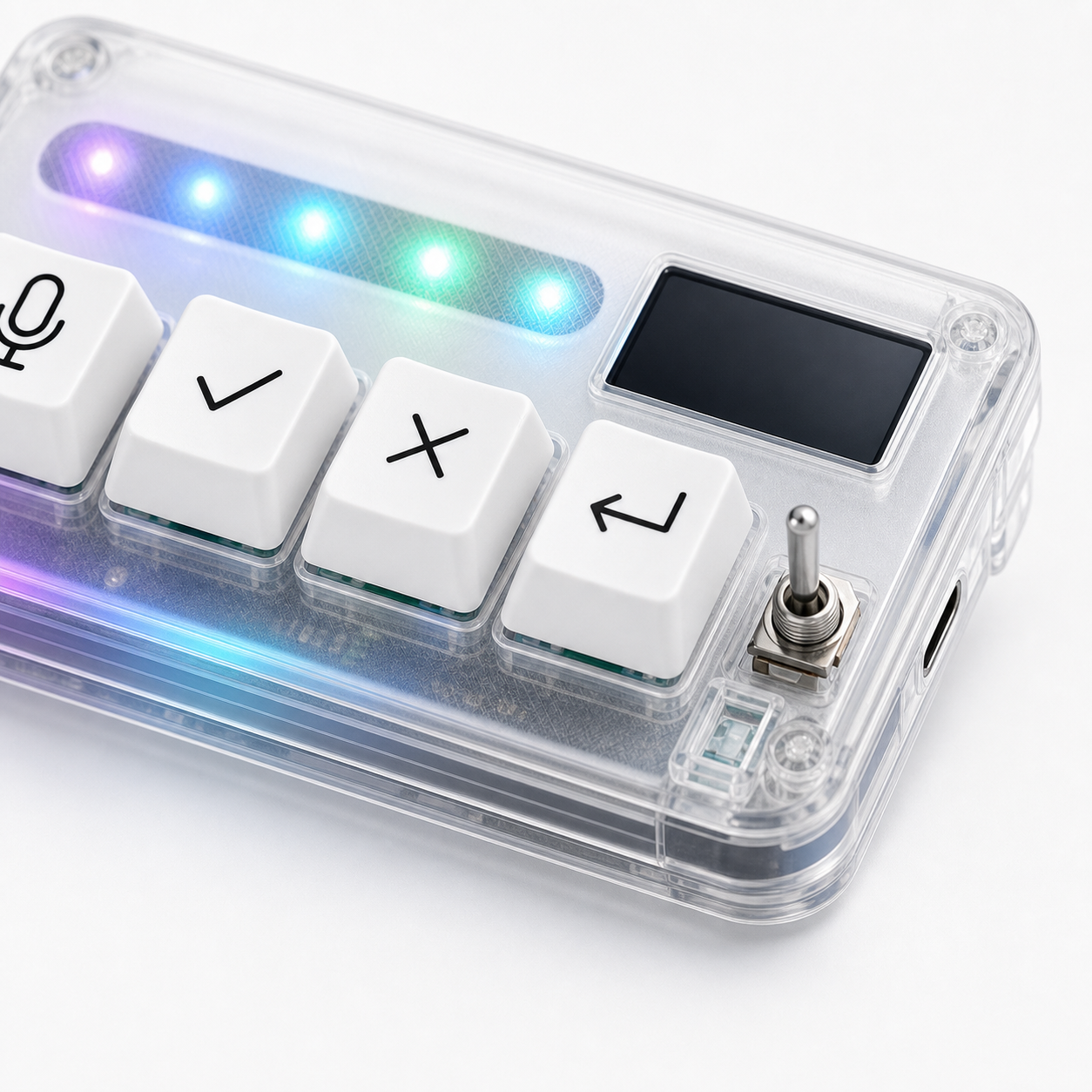
A safe test project is the best place to learn a new AI keypad workflow. It lets you press approve, cancel, return, and voice input without worrying that a wrong key will damage a real repository. HarnessKeys is designed to reduce friction, but any fast control surface should be tested before it joins important work.
The test project does not need to be fancy. In fact, it should be boring. A tiny app, scratch file, sample function, or copied toy component is enough. The goal is to test behavior, not impress yourself with a complex demo.
Create a sandbox that cannot hurt production
Use a folder that is clearly separate from real work. Name it something obvious like ai-keypad-sandbox or harnesskeys-test. Put it somewhere that is not connected to deployment, customer data, production credentials, or a repository you care about.
If you prefer using Git, initialize a small throwaway repo. That lets you see diffs and reset easily. If you do not need Git, a plain folder with one or two files is enough.
The key idea is emotional safety. You should be willing to make mistakes there.
Pick a tiny coding task
Choose a task small enough to understand completely. Examples: write a function that formats a date, add a simple validation check, explain a short code snippet, create a unit test outline, or refactor a toy component. Avoid tasks that touch authentication, payments, deployment, or file deletion.
Small tasks make keypad behavior visible. If something goes wrong, you can tell whether the issue came from the prompt, the AI tool, the mapping, or your review habit.
A complicated task hides setup problems under real project complexity.
Test voice input with a complete but harmless prompt
Use the mic key to dictate a prompt like: “Explain this function and suggest one small improvement, but do not edit files yet.” That prompt tests voice input, transcription, AI understanding, and your ability to include boundaries.
Watch where the text appears. If dictation lands in the wrong field, fix focus before continuing. If transcription is messy, adjust microphone selection, speaking pace, or environment noise.
Voice input should feel easier than typing, not less predictable.
Approve only a reversible step
Next, approve something low-risk. Accept a comment suggestion, continue a response, or allow the AI tool to produce an explanation. Do not approve a broad file rewrite during the first test. You are learning the physical feel of the approve key.
Notice whether the key press feels intentional. If you hit approve accidentally or cannot remember which key it is, stop and adjust placement before going further.
Approval should feel like a decision, not a twitch.
Cancel one bad direction on purpose
Ask for something slightly wrong or overly broad, then cancel it. This teaches you how the stop action behaves before the stakes are real. Does it stop generation? Close a panel? Reject a suggestion? Interrupt a terminal? Do you need the right window focused?
Write down the result. A cancel key you have tested is calming. A cancel key you only hope works is not much protection.
Practicing cancellation makes future exploration safer.
Review the output like you would in real work
Even in a sandbox, review what the AI produced. Read the code. Check whether the explanation matches the file. If tests exist, run them. If no tests exist, manually inspect the behavior. This keeps your approval habit honest.
HarnessKeys can make the workflow smoother, but it should not train you to accept output without thinking. The sandbox is where you build the review rhythm you want to bring into real projects.
Fast control plus lazy review is a bad combination.
Change one variable at a time
If the test feels awkward, change only one thing: desk placement, connection mode, voice trigger, approve mapping, cancel mapping, or return behavior. Then repeat the same tiny task. Changing five things at once makes it impossible to know what helped.
This is especially important for Bluetooth, microphone settings, and app-specific shortcuts. Treat setup like debugging. Isolate the variable.
The boring method gets you to a stable setup faster.
Keep team workflows outside the first sandbox
If you work on a team, do not test new keypad approvals inside a shared branch, shared workspace, or repository with active review rules. A personal sandbox is better because nobody else has to interpret your experiments, and no teammate has to wonder why a strange AI-generated change appeared in the history.
Once the mapping is stable, you can bring the same workflow into a team setting with clearer rules: what the keypad approves, what still needs human review, and which tasks are safe for AI assistance. That conversation is easier after you have tested the controls privately.
Move to real work only after the loop feels boring
The sandbox is successful when the loop feels almost uneventful: voice starts in the right place, approve fires only when intended, cancel stops the right thing, return moves the prompt along, and your hand knows where to go.
At that point, move to a real project slowly. Start with a branch, a small task, and a review checkpoint. If something goes wrong, return to the sandbox and fix the mapping there.
For product context, review the HarnessKeys AI workflow keypad. For device or order issues, contact support.
