
Setup and Tutorials
How to Document Your Key Mappings So Future You Remembers
Jun
Future you will forget the key mappings. Not because you are careless, but because AI coding setups evolve. You try a new editor, change a shortcut, switch from USB to Bluetooth, add voice input, test a different assistant, and suddenly the mapping that felt obvious last month becomes a tiny mystery on your desk.
Documenting your HarnessKeys setup takes a few minutes and saves real friction later. It also makes the keypad safer. When approve and cancel have clear meanings, you are less likely to press a key based on a memory that is no longer true.
Write the role, not only the shortcut
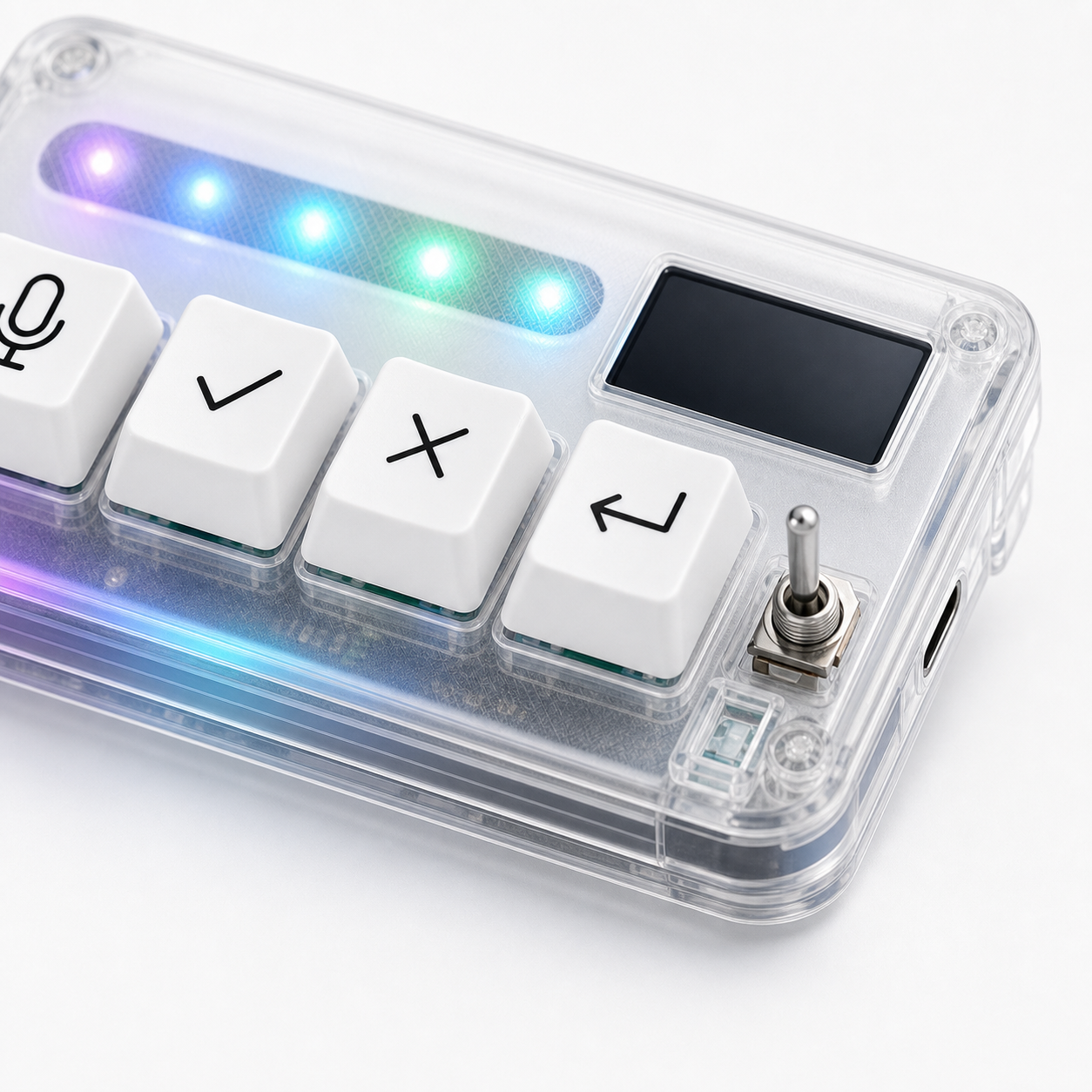
A shortcut by itself is not enough. “Cmd+Enter” or “Ctrl+Shift+X” may describe the signal, but it does not explain the job. Write the role first: mic starts voice input, approve accepts reviewed suggestion, cancel stops current AI action, return submits follow-up prompt.
Roles are what your hand remembers. Shortcuts are implementation details. When you change tools, the role may stay the same even if the shortcut changes.
A good mapping note should help you rebuild the behavior, not just copy a key combination.
Create a tiny mapping table
Use a simple table in a note app, README, paper card, or project wiki. Include physical key, role, shortcut, app or tool, connection mode, and any warning. Keep it short enough that you will actually read it.
For example: mic key, voice prompt, system dictation shortcut, browser prompt field, USB, requires microphone permission. Or: X key, cancel generation, app-specific cancel shortcut, AI assistant panel, focus must be in panel.
The warning column is often the most valuable part.
Keep tool-specific notes separate
Your mapping may behave differently in Cursor, ChatGPT, Claude Code, Codex, a terminal, or a browser. Do not pretend one note covers everything if the behavior changes by tool. Add tool-specific lines when needed.
This prevents a subtle problem: you press a key expecting the Cursor behavior while the browser is focused, or you expect a terminal interrupt while focus is in an editor panel. Documentation makes those differences visible.
If the same key has different meanings in too many places, simplify the setup.
Record connection mode and device context
USB and Bluetooth can behave differently. A desktop, laptop, dock, hub, or operating system update can also affect setup. Write down the machine and connection mode you tested. If HarnessKeys works perfectly on your MacBook over USB but behaves differently on a Windows desktop over Bluetooth, that context matters.
You do not need a long hardware inventory. Just record enough to explain where the mapping is known to work.
Good notes reduce support confusion too.
Add a date and reason for each change
When you change a mapping, add the date and reason. “Changed cancel because it closed the wrong panel” is much more useful than a mysterious new shortcut. The reason reminds you what problem the change solved.
This is especially helpful after operating system updates, AI tool changes, or a move to a new computer. If a shortcut stops working, the note history can show whether the mapping was already fragile.
Tiny change logs are not overkill when they prevent repeated mistakes.
Back up the mapping somewhere boring
Do not keep the only mapping note inside a tool you might stop using. Put it somewhere boring and durable: a plain text note, project README, synced notes app, or printed card near the desk. If your setup is part of a team workflow, put the note where teammates can find it.
A physical keypad becomes part of the desk. The mapping note should be just as easy to recover.
Future setup should be reconstruction, not archaeology.
Review mappings after real sessions
Set a lightweight review cadence. After the first day, check whether each key still makes sense. After a week, remove mappings you did not use. After changing AI tools, test approve and cancel again. After moving machines, run the safe test project again.
Most people add too many shortcuts and then forget half of them. The best HarnessKeys setup is usually smaller and more memorable than the setup you imagine on day one.
Let usage decide what stays.
Update the note when you move machines
A mapping that works on one computer may need small changes on another. The operating system may reserve a shortcut, the browser may handle return differently, Bluetooth pairing may have a different name, or the voice input tool may use another microphone. When you move HarnessKeys to a new machine, treat the mapping note as a checklist, not a guarantee.
Run the same small test routine and mark what changed. This is especially useful for people who switch between a desktop, laptop, office machine, and travel setup. The keypad can stay familiar while the environment changes around it.
A mapping note makes support easier
If you ever contact support about a device or setup issue, your mapping note helps separate hardware behavior from software configuration. You can say which key, which connection mode, which machine, which app, and what you expected to happen.
For hardware or order questions, use HarnessKeys support. For product context, review the HarnessKeys AI workflow keypad.
Documentation is not glamorous. It is how a small desk controller stays useful after the novelty wears off.
