
Use Cases and Workflow Playbooks
Daily Vibe Coding Routine With HarnessKeys
Jun
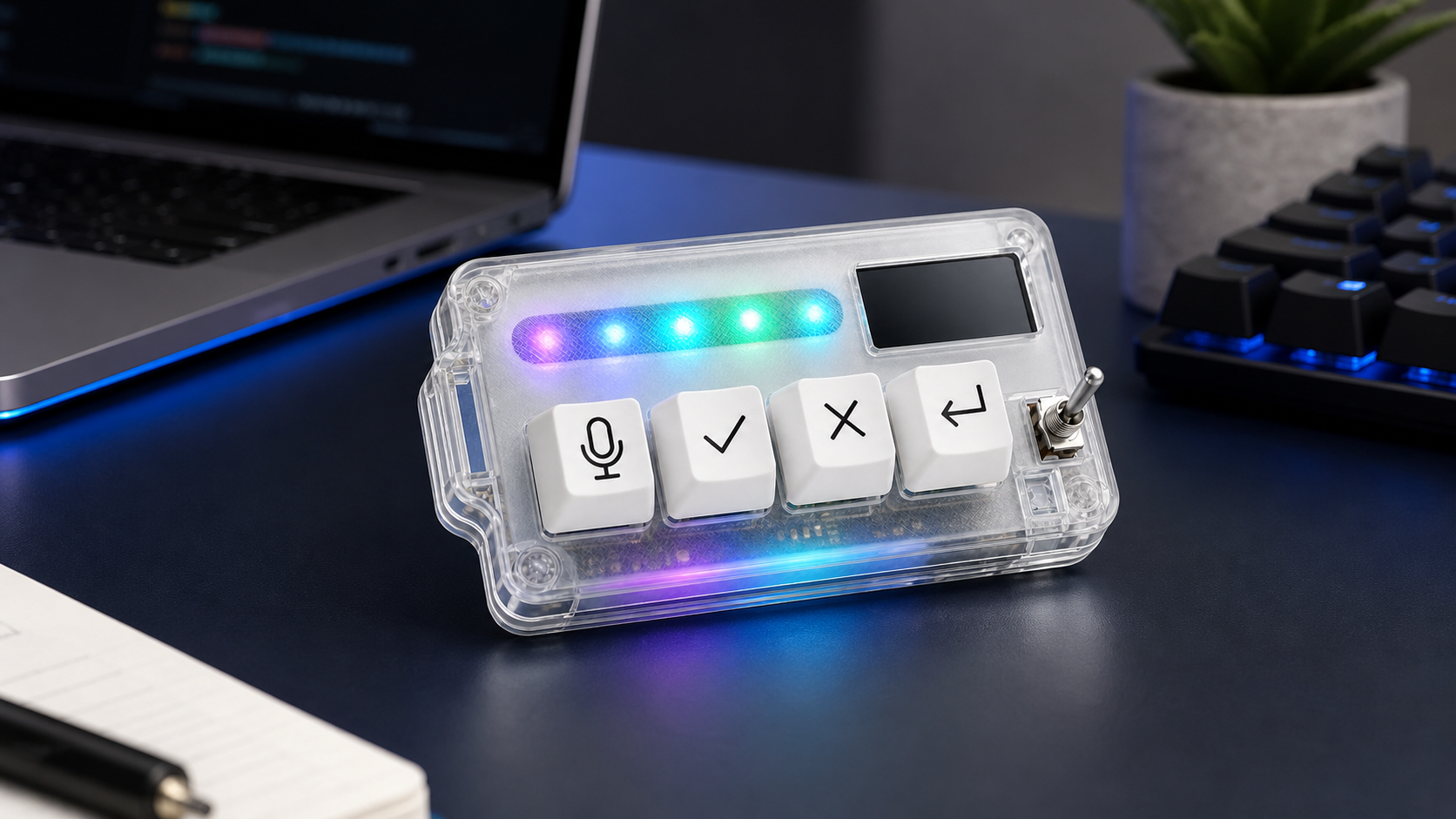
A daily vibe coding routine works best when it is repeatable. The point is not to turn every morning into a dramatic productivity ritual. The point is to make the first AI coding session easier to start, easier to steer, and easier to stop when the tool heads in the wrong direction. HarnessKeys helps by giving the repeated control moments a fixed place under your hand.
The routine below is designed for active users who already have the keypad connected and want to make it part of normal work. It keeps the setup small: voice input, approve, cancel, return, and a few checkpoints that protect code quality.
Begin with a two-minute desk reset
Before opening the first AI session, check the physical setup. Is HarnessKeys in the same place as yesterday? Is the connection active? Is the microphone available? Is your editor or AI tool focused in the place where prompts should land?
This tiny reset prevents the most annoying first-session problems: dictation going into the wrong field, approve acting in the wrong window, or cancel not reaching the active tool. It also teaches your hand that the keypad is part of the desk, not a gadget you rediscover every few days.
Pick the first prompt before pressing the mic key
Do not start the day by opening an AI tool and improvising. Decide the first prompt before pressing the mic key. It might be “summarize yesterday’s failing test,” “inspect this component for state bugs,” or “outline a safe refactor plan before editing.”
The mic key is most useful when it captures an instruction you already understand. If you press it before knowing what you want, voice input only records uncertainty faster.
A clear first prompt sets the tone for the whole session.
Use approval only after a visible review
During the daily loop, approval should come after you have looked at the suggestion. Read the change, scan the diff, or understand the proposed next step before pressing the approve key. The physical key can make the action faster, but it should not make your review disappear.
This habit matters most when you are tired or busy. A repeated workflow can become automatic in a bad way. Keep approve tied to a conscious decision.
If you would not click accept with your mouse, do not press approve with your finger.
Cancel drift as soon as you notice it
AI coding sessions often drift gradually. The answer gets broader than the task. The tool starts refactoring nearby code. The prompt turns into architecture advice when you needed a specific fix. The cancel key is there for those moments.
Use cancel early. Then re-prompt with clearer boundaries. This is better than letting a wrong direction build momentum and trying to salvage it later.
A daily routine should normalize stopping. Stopping is part of control.
Add breakpoints between work blocks
After a few prompts, pause. Ask what changed, what remains, and what needs verification. This can be a spoken prompt, a manual note, or a quick review of the diff. The important thing is to avoid a long chain of AI actions with no checkpoint.
HarnessKeys helps move the session along, but breakpoints keep you from losing the plot. A workflow that feels fast but leaves you confused at the end is not actually fast.
Make the checkpoint part of the routine.
Keep one scratch prompt for messy thoughts
Some ideas are not ready for the main AI session. Keep a scratch document or temporary prompt area where you can dictate messy thoughts before sending them. This is especially useful when using voice. You can speak the raw idea, clean it up, then submit the refined version.
This prevents the mic key from turning every half-formed thought into a live instruction. It also improves prompt quality without forcing you to type everything.
Voice is fast. Scratch space keeps it controlled.
End with cleanup, not another prompt
At the end of the day, do not let the final action be one more vague prompt. Clean up the state. Review changes, note unresolved issues, close abandoned threads, and write the next useful prompt for tomorrow. If you use Git, check what is modified before walking away.
HarnessKeys can help with the session rhythm, but end-of-day cleanup is a human responsibility. It protects tomorrow’s start.
A clean ending is one of the easiest ways to make AI coding less tiring.
A routine worth repeating
The daily HarnessKeys routine is not complicated: reset the desk, choose the first prompt, use voice for context, approve after review, cancel drift early, pause at breakpoints, and clean up before stopping.
That routine turns the keypad from a novelty into a working control surface. If you are still refining the setup, review the HarnessKeys AI workflow keypad and keep the first few days deliberately simple.
