
Use Cases and Workflow Playbooks
How to Use HarnessKeys for Code Review Sessions
Jun
Code review is full of small decisions. Accept this suggestion. Reject that one. Ask the author to clarify. Compare the diff with the original intent. Check whether tests cover the behavior. In an AI-assisted review session, those decisions multiply because you may also ask an AI tool to summarize, inspect, or suggest changes.
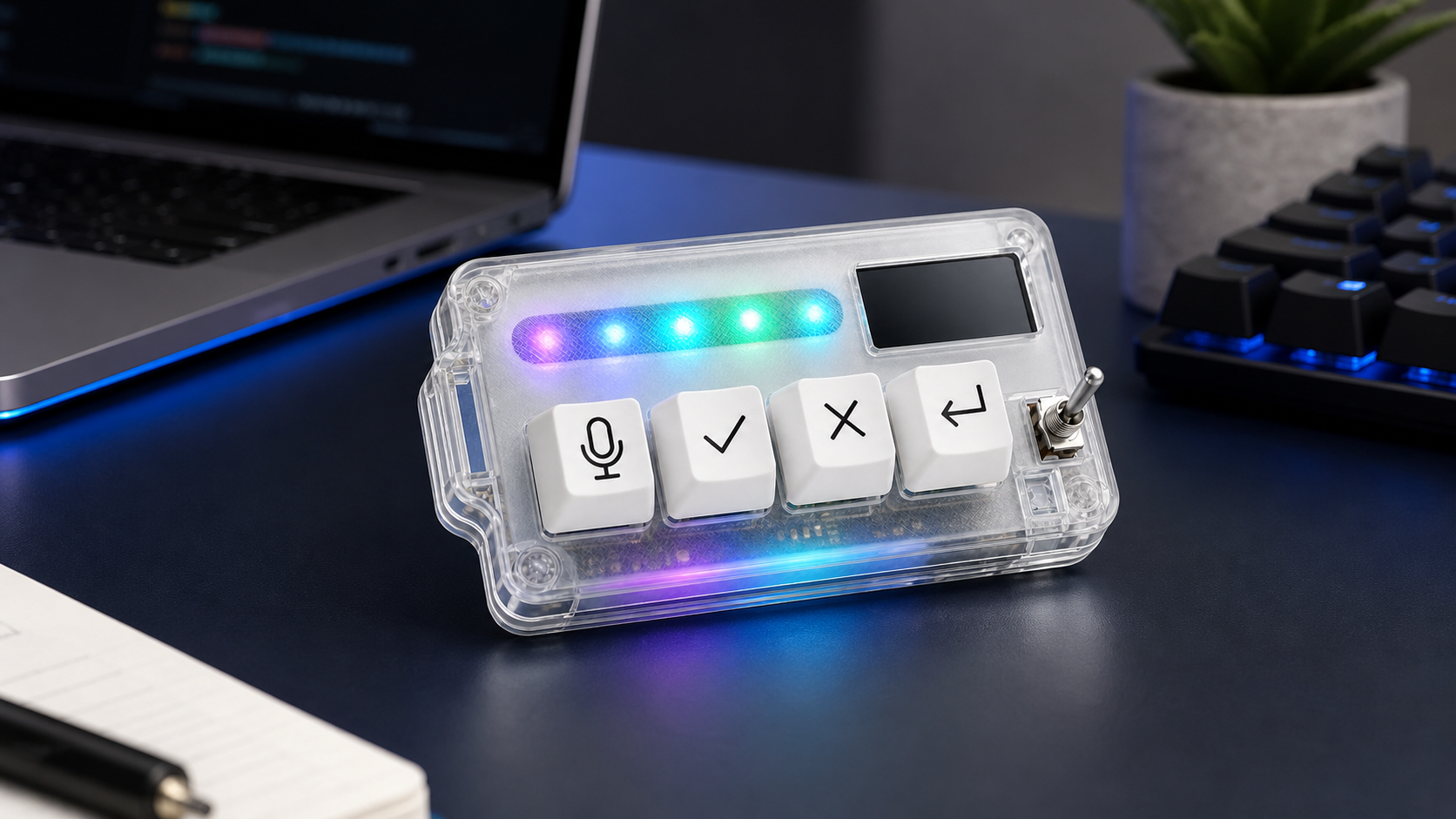
HarnessKeys can help by giving the repeated review controls a physical rhythm. Voice input captures review comments. Approve confirms a useful suggestion after you have read it. Cancel rejects a bad direction. Return moves the next review step along.
State the review intent first
Before asking an AI tool to help with review, say what kind of review you want. Are you looking for bugs, readability problems, security concerns, missing tests, or a quick explanation of the diff? A vague prompt such as “review this” often creates a vague answer.
The mic key is useful here because review intent can be spoken naturally. Try a prompt like: “Review this change for edge cases and missing tests first. Do not suggest style rewrites unless they affect behavior.”
Good review starts with the right lens.
Use voice for comments that need nuance
Review comments often have tone. You may want to ask a question, explain a concern, or suggest a small alternative without sounding harsh. Voice can capture that nuance better than a rushed typed comment.
Use HarnessKeys to start dictation, then review the transcribed text before posting or sending it into an AI tool. Spoken comments can be clear, but transcription mistakes happen. Do not send a comment just because it appeared quickly.
The best voice-assisted review still includes a quick human edit.
Approve only after reading the diff
The approve key should not become a shortcut for trusting generated review advice. Use it after reading the relevant diff and confirming that the suggestion makes sense. If an AI tool recommends a change, inspect the code yourself before accepting the idea.
This is especially important for reviews involving data handling, authentication, payments, permissions, or shared utilities. A confident AI explanation can still miss project-specific context.
Approval is a review decision, not a convenience click.
Cancel broad advice before it eats the session
AI review tools sometimes widen the scope. You ask about a bug, and the answer turns into a full style guide. You ask for missing tests, and the tool rewrites half the implementation. A cancel key helps you stop that drift and ask a narrower question.
Use cancel when the answer is not serving the review goal. Then prompt again with stronger boundaries: “Only inspect error handling in these two functions” or “Only list test gaps, no rewrite yet.”
Review time is limited. Protect it.
Make final checks separate from AI suggestions
Before approving a pull request or accepting a change, run the final checks that belong to your workflow. That may include tests, linting, browser verification, product behavior, accessibility, or reading the final diff. Do not let an AI summary replace those checks.
HarnessKeys can speed the prompt and review loop, but final responsibility stays with the reviewer. A physical approve key should be the last step after your checks, not the first step after an AI answer.
This distinction keeps the workflow honest.
Use one keymap per review surface
If you review in a browser, editor, terminal, and AI tool, be careful with mappings. A key that approves a suggestion in one place may submit a comment in another. Document what each key does in the review surface you use most.
If the behavior changes too much by context, simplify. You can use HarnessKeys for voice comments and cancellation while leaving final approval on the normal UI. That is still a useful workflow.
Safety beats cleverness in review.
Keep review notes short and actionable
When using AI assistance, it is easy to generate long review notes. Long is not always helpful. Ask for concise findings, specific file or behavior references, and clear next actions. Use voice to ask for the shape you want before the tool answers.
For example: “Give me the top three behavioral risks and one missing test suggestion.” That prompt produces a review artifact someone can act on.
HarnessKeys helps you ask faster. The prompt still needs judgment.
Save one note for the author
At the end of an AI-assisted review, turn the useful findings into one clear note for the author. Avoid dumping the whole AI answer into the review thread. Summarize the issue, why it matters, and what change would resolve it. Voice input can help you draft that note, but you should still edit it for tone and accuracy.
This is where the workflow becomes human again. The author does not need to know every prompt you tried. They need a fair, specific review comment that helps the code improve.
A code review rhythm for HarnessKeys
A practical review loop looks like this: speak the review intent, inspect the diff, ask the AI tool for focused help, approve only reviewed suggestions, cancel broad or wrong advice, and perform final checks yourself.
That is where a compact keypad earns its place. It does not replace review skill. It reduces the small control friction around review skill. For product context, visit the HarnessKeys product page.
